

Data-Driven Analytics in Litigation Future Research Directions for the UK Industry
To enhance the effectiveness of these initiatives, advanced analytics models have been developed to predict outcomes such as program completion and recidivism while offering actionable insights for resource allocation and decision-making. Below, we explore existing research and propose future directions for applying these frameworks in the UK.
Current Applications of Analytics in Litigation
1. Predicting Program Success:
- Advanced analytics tools leverage real-world data from drug courts to identify which participants are more likely to complete rehabilitative programs. For example,Zolbanin et al. (2020)demonstrated the use of predictive models to assess graduation rates, aiding resource optimization and improving program success [1].
2. Recidivism Analysis:
- Predictive analytics also play a crucial role in identifying individuals who are at a higher risk of reoffending. Delen et al. (2021) developed models to predict recidivism, allowing administrators to intervene proactively and tailor rehabilitation plans [2].
3. Decision-Making Guidelines:
- Prescriptive analytics models provide insights into offender characteristics that influence outcomes. These guidelines assist drug court administrators and jurisdictions in making informed, efficient decisions about resource allocation and treatment design.
Researchers exploring future directions in analytics can use these principles to shape innovations that are transparent, actionable, and ethical, driving meaningful impact in the field[7].
Future Research Directions for the UK Industry
As the UK considers adopting or expanding therapeutic justice models similar to drug courts, there are numerous opportunities for research and innovation in litigation analytics. Below are potential areas for exploration:
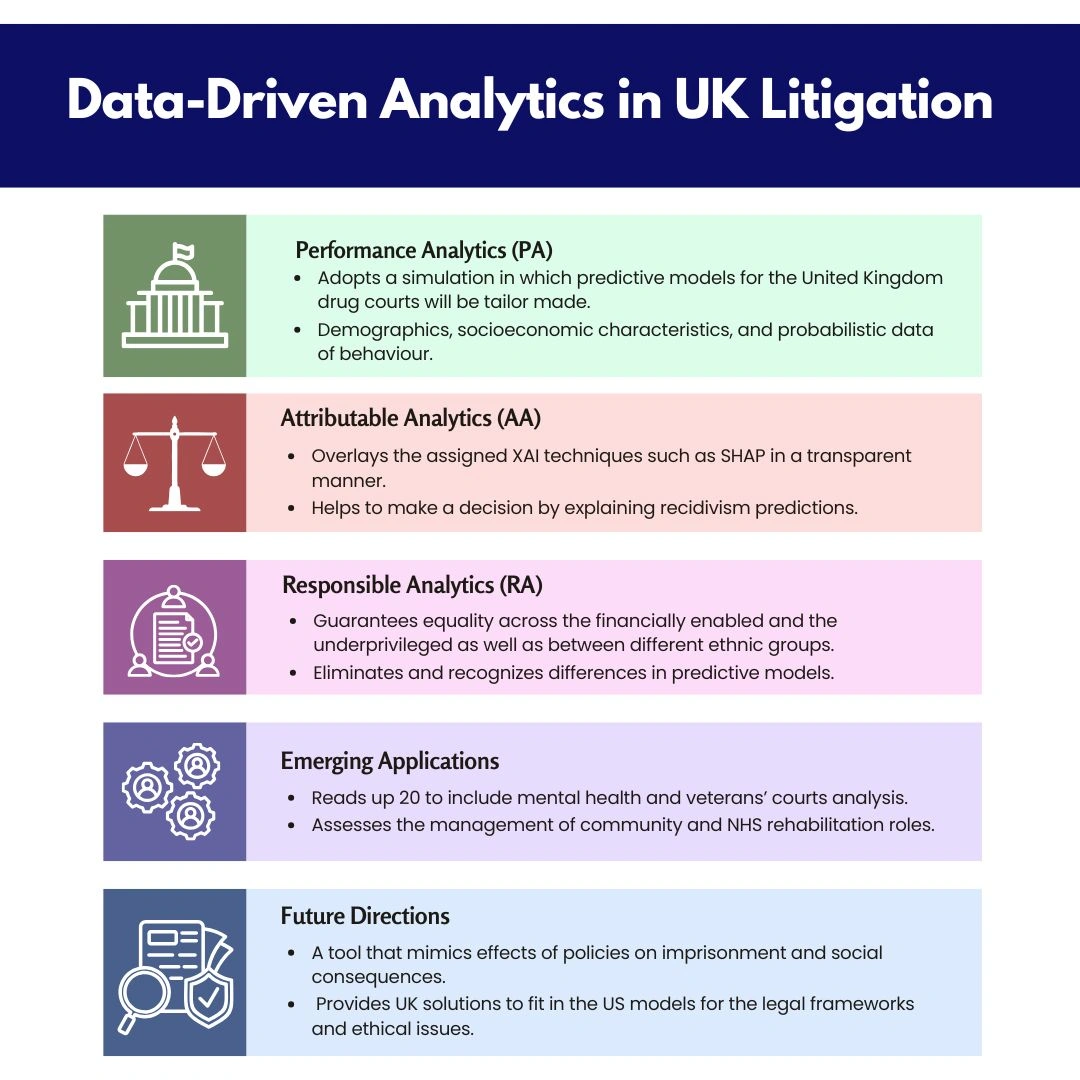
Performance Analytics (PA): Improving Predictive Accuracy
- Future Direction: Develop tailored predictive models for UK-specific legal frameworks, focusing on rehabilitation programs for drug-related offenses.
- Example Application: Create analytics models to predict rehabilitation success rates in drug treatment courts in England and Wales, incorporating demographic, socioeconomic, and behavioral factors unique to the UK population.
- Research Need: Adapt existing US-based models to reflect UK legal and cultural contexts, including the influence of community services and the NHS on offender rehabilitation.
Did You Know?
Because the therapeutic drug courts focus on treatment rather than imprisonment, they lower expenses and enhance community benefits. Predictive models such as those of Zolbanin et al. (2020) estimate the program efficacy and decreased recidivism in this way by modifying treatments.
While Ex AI technologies like SHAP provide decision-making transparency, responsible analytics eliminates biases to treat various groups fairly. In addition to drug courts, it can be used in mental health courts and veterans' courts. By combining NHS resources with other community programs, they improve criminal reform and other social benefits.
Attributable Analytics (AA): Enhancing Interpretability
- Future Direction: Integrate explainable AI (XAI) techniques to ensure transparency in predictive models used in UK drug courts.
- Example Application: Use SHAP (Shapley Additive Explanations) to highlight the factors influencing recidivism predictions, such as addiction severity or prior convictions, enabling judges and administrators to understand the rationale behind recommendations.
- Research Need:Ensure compliance with UK data protection laws like GDPR while enhancing model interpretability for non-technical stakeholders.
Responsible Analytics (RA): Ensuring Ethical Use
- Future Direction: Focus on ethical considerations, such as bias mitigation, to ensure fair and equitable treatment of offenders across different socioeconomic and ethnic backgrounds in the UK.
- Example Application: Develop frameworks to detect and correct biases in analytics models that might disproportionately affect minority groups.
- Research Need: Collaborate with policymakers and legal experts to align analytics tools with UK standards for fairness and accountability in the justice system.
Enhance Your Study with Professional Assistance
In need of help for your research and to meet your academic dreams? Don’t hesitate to contact us for help at any point of your research process: our services are individualized and comprehensive. Contact us today to learn how we can help you get the help you need to succeed in your academic pursuits!
Emerging Applications for the UK Litigation System
1. Alternative Justice Models:
- Expand analytics frameworks to other therapeutic court models, such as mental health courts or veterans’ courts, to assess their feasibility in the UK.
2. Community Support Integration:
- Use analytics to evaluate the role of community services and healthcare providers in rehabilitation, ensuring seamless collaboration with the NHS.
3. Predicting Policy Impact:
- Develop simulation models to predict the long-term societal impact of therapeutic justice policies in the UK, focusing on reduced incarceration rates and improved social outcomes.
Conclusion
Data-driven analytics hold transformative potential for the UK litigation system, particularly in therapeutic justice. By leveraging the XAIOR framework, researchers can create predictive, interpretable, and ethical models tailored to the UK context. These tools can enhance the effectiveness of drug courts and other alternative justice models, ensuring better outcomes for individuals and society.
Call to Action for Researchers
To advance this field, researchers should:
- Tailor predictive models for the UK’s legal and cultural landscape.
- Ensure interpretability to build trust among stakeholders.
- Prioritize ethical considerations, such as fairness and equity.
By addressing these areas, the UK litigation system can embrace innovative, analytics-driven approaches that align with societal goals and improve justice outcomes.