
Biological & Life Science
Manuscript Writing
Biological & Life Science
New Insights into Complex Role of Mitochondria in Parkinson’s disease
Antibody Detection in Diagnosis of Schistosomiasis
Effects of Biomass Particle Size in Cellulosic Biofuel Production
Dissertation on Modelling Sugarcane Nitrogen Uptake Patterns
An Integrative Review on Complementary and Alternative Medicine
A Neuronal Trigger- Endoplasmic Reticulum Stress on Alzheimer’s Disease
Antibody Detection in Diagnosis of Schistosomiasis
Schistosomiasis is a significant global public health concern, with an unmet need for regular, cost-effective diagnostic techniques. These measures are necessary not just for residents of endemic areas, but also for visitors who may have gotten infected while visiting such locations. Methods that allow infections to be accurately identified are essential for successful disease control, and with the prevalence of schistosomiasis showing no signs of slowing down, the need for good diagnostic tools is greater than ever. This isn’t just for usage in endemic places; it’s also for accurate infection detection in visitors and tourists, who are becoming increasingly infected and returning home.
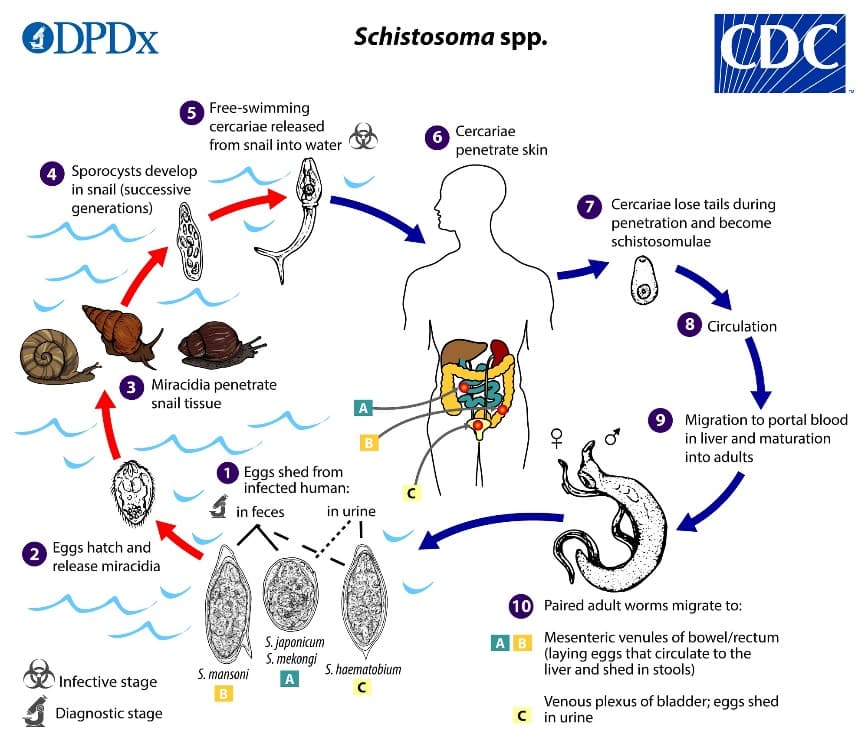
A brief examination of the ‘direct’ techniques of diagnosing schistosomiasis, either parasitologically or by detection of circulating and expelled antigens, is conducted initially. Other recent evaluations on this parasite infection’s diagnosis. The conventional technique of diagnosing schistosomiasis is to look for ova, with the infecting species being determined by egg morphology. It is the most straightforward and specific method of determining the existence of a schistosome infection.
The goal of all schistosomiasis control initiatives is to minimise the prevalence and severity of infection. Continuing to achieve that goal will simply worsen the issues already present in existing diagnostic techniques, which derive from their fundamentally low sensitivity. If it is verified that antibody detection methods’ apparent lack of specificity (in comparison to parasitology) is, in fact, a reflection of the latter’s superior sensitivity, antibody detection may become the diagnostic method of choice.