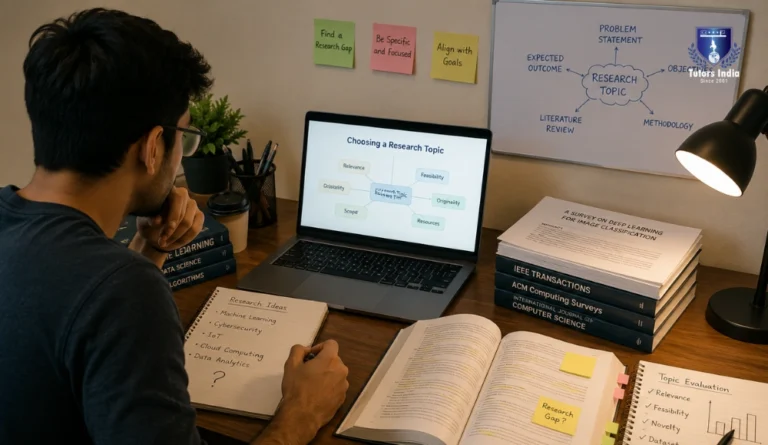

What Are the Common Mistakes in Writing Objectives for a UK Research Proposal?
- Home
- How To Article
- What Are the Common Mistakes in Writing Objectives for a UK Research Proposal?
Table of Content
- The Role of Objectives in a UK Research Proposal
- Writing Objectives That Are Too Vague
- Confusing Research Aims with Research Objectives
- Making Objectives Too Broad or Overambitious
- Lack of Alignment Between Objectives and Methodology
- Using Descriptive Instead of Analytical Verbs
- Ignoring Feasibility and Time Constraints
- Writing Too Many Objectives
- Best Practices for Strong UK Research Objectives
- Conclusion

What Are the Common Mistakes in Writing Objectives for a UK Research Proposal?
Clear and concise research objectives are critical components of a strong research project proposal within the UK (United Kingdom). Research proposals submitted by universities in the UK are assessed for their clarity of purpose, feasibility, alignment with methodologies used, and academic integrity. As such, a well-defined set of research objectives will provide a user-friendly framework for the development of the entire study and serve as a strong research proposal example for examiners. They can inform the researcher of what is required during the literature review process, provide direction on methodology used, and assist in framing the analysis and discussion sections of their report. Many postgraduate students continue to make mistakes when constructing their objectives, resulting in their proposals lacking coherence and credibility—one of the most common mistakes in research proposal writing.[1]
This article will highlight the behavioural factors that cause students to create weak research objectives, explain the most frequent errors made when preparing objectives for a UK research project proposal, and provide suggestions on how to avoid repeating the same mistakes when learning how do you make a research proposal.
1. The Role of Objectives in a UK Research Proposal
The objectives found in the proposal for a master’s or doctorate at UK colleges convert an overarching research goal into a set of measurable actions. A good set of objectives will show an evaluator that the researcher knows precisely what they want to accomplish and how success will be evaluated, as expected in a high-quality research proposal template. Examiners expect the objectives to: [2]
- Have a clear focus
- Be logically sequenced
- Be methodologically relevant
- Have academic and practical significance.
2. Writing Objectives That Are Too Vague
A common problem is using imprecise wording such as: [3]
- “To explore the topic”
- “To look at different factors”
- “To understand the issue”
These phrases do not specify what will be analysed. Vague objectives make it impossible for examiners to judge feasibility or rigour, which often leads students to seek research proposal help.
Improved example
Weak objective | Strong objective |
To explore student stress | To analyse the relationship between assessment methods and reported stress levels among UK postgraduate students |
The stronger version defines variables, context, and action.
3. Confusing Aims with Objectives
The aim of the study is a broad statement, but the objectives are more specific tasks.
- The aims of the study are to investigate how remote education impacts postgraduate involvement in higher education.
- The specific objectives prior to conducting the research include:
- Measuring attendance rates during the time that online delivery had taken place
Comparing participation rates before and after the transition to online delivery system. Using this approach will give an example for students in their proposals on steps taken towards achieving their objectives instead of repeating the aims again as an objective.
4. Making Objectives Too Broad or Overambitious
The objectives of the dissertation must be achievable within the timescale and word limit imposed by the dissertation. Some proposals include objectives that would require a large-scale, multi-year study, which is a common error in research project proposal submissions. [4]
In the past, some common problems of research projects have included:
- Attempting to collect data from multiple countries without having access to adequate sources of data.
- Attempting to conduct both nationally representative surveys and ethnographic studies covering several different regions.
- Attempting to provide theoretical, empirical, and policy contributions at the same time.
- UK examiners prefer focused and realistic scopes to impractical and grandiose ambitions.
5. Lack of Alignment with Methodology
Objectives must logically connect to methods. If an objective states “to measure impact”, but the method is purely qualitative interviews with a small sample, there is a mismatch.
Objective type | Suitable methods |
Measure, test, quantify | Surveys, experiments, statistical analysis |
Explore, interpret, understand meanings | Interviews, focus groups, thematic analysis |
Such misalignment is frequently criticised in UK marking criteria and is a key issue addressed in research proposal help services.
6. Using Descriptive Instead of Analytical Verbs
The objectives that only promise to provide a description provide shallow academic content.
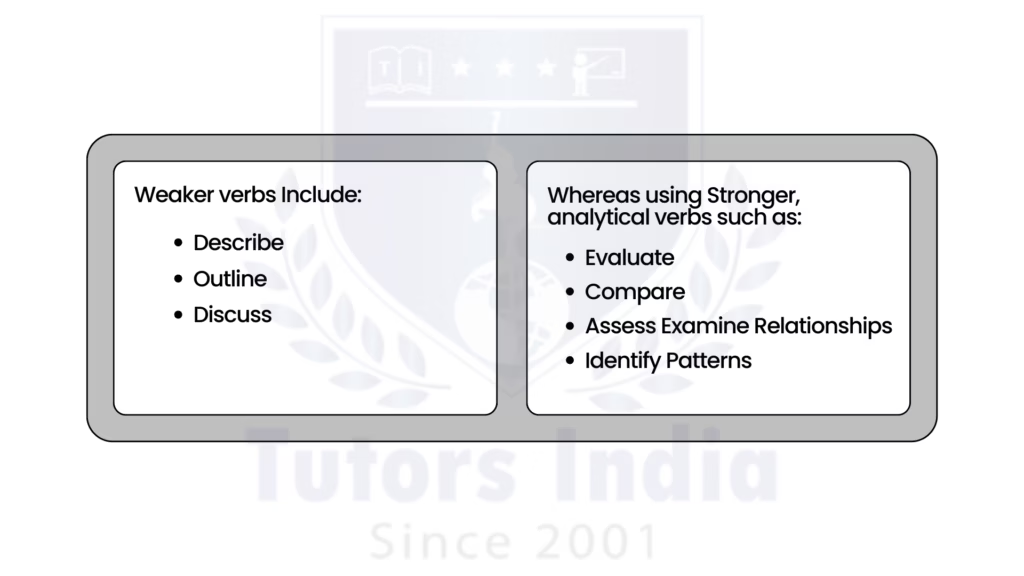
Will demonstrate critical and analytical intent rather than merely reporting in UK proposal submissions.
7. Ignoring Feasibility and Time Constraints
There are several factors to consider when establishing objectives. Below are three important points to consider.
- Available Data to Analise
- Ethical Approval Process Required to Conduct Research
- Amount of Time Available to Complete Data Gathering and Analysis
An example of an unrealistic objective for a master’s dissertation would be “To interview 200 Senior Executives” as this will demonstrate to examiners that you did not adequately plan your objectives.
8. Writing Too Many Objectives
The proposals for UK master’s programs generally work better when there are 3 to 5 tightly related objectives rather than 8 to 10 objectives as the result is often a more superficial analysis of each of the objectives.
If you have too many objectives, you will generally suffer from:
- Loss of focus:
- Fragmented chapters:
- Weak overall argument:
You should therefore focus on the quality and coherence of your objectives rather than the quantity.
9. Best Practices for Strong UK Research Objectives
Effective objectives are:
- Specific – outline exactly what will be researched
- Measurable/observable – documented outcomes can be validated using data
- Aligned – are closely matched with research questions and methods
- Realistic – able to be achieved with respect to the project’s scope
- Analytical – able to demonstrate critical analysis by the researcher
Well-structured objective set [5]
Aim: To investigate the effect of hybrid working on collaboration between employees in UK Tech Companies.
Objectives:
- To compare the ways that teams communicate when they are fully remote compared to when they are in hybrid teams
- To assess employee’s perceptions about how effective collaboration was through semi-structured interviews
- To evaluate how digital tools affect how teams collaborate
- To identify organisational variables that promote effective collaboration in hybrid teams
Each objective:
- Has a clear task to deliver
- Provides a suggested method for delivery
- Demonstrates a contribution to the overall aim/goal of the project
Conclusion
One of the most frequently cited weaknesses in UK university research proposals is poorly constructed objectives. Issues such as vague wording, confusion between aims and objectives, overambitious scope, and weak methodological alignment reduce examiner confidence and represent major common mistakes in research proposal writing. By developing clear, analytical, feasible, and methodologically aligned objectives, students can significantly improve the quality of their research project proposal and create a strong framework for their dissertation.
What Are the Common Mistakes in Writing Objectives for a UK Research Proposal? [Get Ethical Dissertation Support] or [Schedule a Free Consultation]
References
- Jansen, D. (2021, June 17). Writing A research proposal: 8 common mistakes. Grad Coach. https://gradcoach.com/research-proposal-rejection-mistakes/
- Proctor, E.K., Powell, B.J., Baumann, A.A. et al.Writing implementation research grant proposals: ten key ingredients. Implementation Sci 7, 96 (2012). https://doi.org/10.1186/1748-5908-7-96
- Chatterjee, D., & Corral, J. (2017). How to write well-defined learning objectives. The Journal of Education in Perioperative Medicine, 19(4), E610. https://doi.org/10.46374/volxix-issue4-chatterjee
- Fletcher, A. C., Wagner, G. A., & Bourne, P. E. (2020). Ten simple rules for more objective decision-making. PLoS computational biology, 16(4), e1007706. https://doi.org/10.1371/journal.pcbi.1007706
- Schwab, S., Janiaud, P., Dayan, M., Amrhein, V., Panczak, R., Palagi, P. M., Hemkens, L. G., Ramon, M., Rothen, N., Senn, S., Furrer, E., & Held, L. (2022). Ten simple rules for good research practice. PLoS computational biology, 18(6), e1010139. https://doi.org/10.1371/journal.pcbi.1010139