
Engineering & Technology
PHD Dissertation
Engineering & Technology
Architecture Robots & 3D Printers
Virtual Realities and Immersive Architecture
Technological Developments For Electrical Vechicles
Drones or Unmanned Aerial Vehicles(UAVs)
Modular Construction and 3D Printed Dwellings
Advances in Gas turbine technology
Virtual Realities and Immersive Architecture
Architects and designers have been creating immersive experiences from Building Information Modeling (BIM) since 1988. Recent advances in processors, display technology, and cloud connectivity have further expanded the possibilities facilitated by immersive technologies. Virtual Realities (VR) emerges as an integral part of the design process. Architects and engineers use VR and immersive technologies to streamline the design and construction process, and to optimize designs. From design mock-ups, to project collaboration, through to the final touches, virtual reality has the potential to really sell an idea better than any media[1].
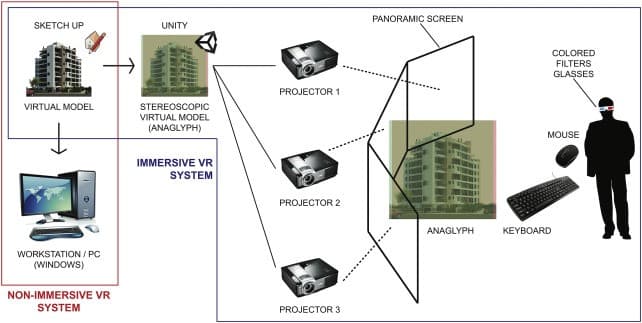
Floor plans, and models are often used as staples of architectural design, but they can be unsuccessful in communicating ideas with clients. With bigger projects, and more stakeholders, discussing the design decisions can be difficult, time consuming and ineffective[2]. This is where VR comes in. As an immersive technology, VR transports customers into a totally interactive 3D environment which gives them the opportunity to walk around a virtual representation of a room or building as a whole. Virtual realities allow designers to test different options completely during the initial stage of the process. Design visualization and immersive technology convey in an intuitive manner the design intent to people with no background in construction or design[3].

Fig1. Virtual Reality for architecture )
Thus, for construction companies, virtual reality comes as a boon to reduce the waste of materials, help with logistics, and turn the cost into relocating digital experience.
Reference:
[1] https://sci-hub.se/10.1016/j.apergo.2019.05.009
[1] http://lib.uib.kz/edulearn19/files/papers/1079.pdf
[1] https://sci-hub.se/10.1109/tbc.2019.2901387
[1] https://aecmag.com/vr-mr/virtual-reality-vr-for-architecture-a-beginner-guide/