
Engineering & Technology
PHD Dissertation
Engineering & Technology
Architecture Robots & 3D Printers
Virtual Realities and Immersive Architecture
Technological Developments For Electrical Vechicles
Drones or Unmanned Aerial Vehicles(UAVs)
Modular Construction and 3D Printed Dwellings
Advances in Gas turbine technology
Organ-on-a-chip
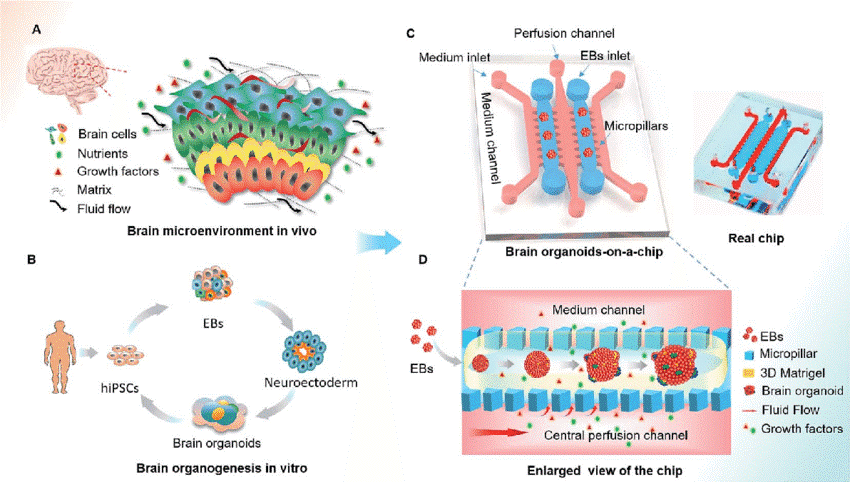
The organ-on-a-chip (OOAC) is in the list of top 10 emerging technologies and refers to a physiological organ biomimetic system built on a microfluidic chip. Through a combination of cell biology, engineering, and biomaterial technology, the microenvironment of the chip simulates that of the organ in terms of tissue interfaces and mechanical stimulation. This reflects the structural and functional characteristics of human tissue and can predict response to an array of stimuli including drug responses and environmental effects. OOAC has broad applications in precision medicine and biological defense strategies. Here, we introduce the concepts of OOAC and review its application to the construction of physiological models, drug development, and toxicology from the perspective of different organs. We further discuss existing challenges and provide future perspectives for its application. [Bachelor thesis organ-on-a-chip (OOAC) topic ideas]

Fig.1. Schematic diagram of the organ-on-a-chip device for 3D culture (ResearchGate.com)
Although OOAC technology has developed rapidly, the human-on-a-chip theory remains distant. PDMS is the most widely employed material, but comes with disadvantages as the resultant film is thicker than the in vivo morphology. A decreased absorbance of small hydrophobic molecules influences solvent efficacy and toxicity. It is thus necessary to identify suitable alternative materials. At present, the cost of manufacturing and experimental implementation is relatively expensive, which is not conducive to the widespread use of organ chips, so components must be of low cost and easy to dispose. More expensive components should be reusable. In terms of integrated system components, the media volume and connector size must be reduced for general use. Collecting samples on the chip may interfere with its operation, resulting in changes in the concentration of various metabolites. More suitable sensors are thus required. Universal cell culture mediums suitable for all organs are also required. Most critically, as the number of organs on the chip increases, functionality becomes more complex and generated data carry artefactual and non-translatable risks. This is currently unsolvable. In the case of long-term repeated administration or on-chip studies, the biomarkers identified in vitro may not fully reflect the in vivo equivalent.
Reference:
https://biomedical-engineering-online.biomedcentral.com/articles/10.1186/s12938-020-0752-0