
Why Students Fail UK Dissertation Marking Criteria
Why Do Students Fail to Meet UK Dissertation Marking Criteria?
- Home
- How To Article
- Why Do Students Fail to Meet UK Dissertation Marking Criteria?
UK Dissertation Marketing Criteria
- Introduction
- Lack of Understanding of Marking Criteria
- Weak Critical Analysis
- Poor Research Design and Methodology
- Inadequate Academic Writing and Structure
- Failure to Demonstrate Original Contribution
- Poor Time Management and Late Revisions
- Common Reasons for Failure: Summary Table
- How Students Can Improve Alignment with Marking Criteria
- Conclusion

Why Do Students Fail to Meet UK Dissertation Marking Criteria?
Meeting the UK dissertations marking criteria for a UK dissertation is one of the most challenging tasks for a student on an undergraduate, master’s dissertation, or PhD programme. Although students often put in a large amount of work into the research they have done and how they will write this up, many students will find they receive grades that do not match their expectations due to their dissertation not meeting the requirements of university assessment standards.
UK universities have specific, detailed marking criteria that they will use to mark your dissertation. Marking criteria cover not just the written content of your dissertation but also the structure of your dissertation, critical analysis of research materials, type of methodology used to carry out the research, how you write academically and how you present your findings. These expectations are closely tied to recognised UK dissertations marking criteria used across institutions.
This article outlines the most common reasons students fail to achieve the marking criteria for UK dissertations and provides practical solutions to help overcome these challenges and avoid common dissertation mistakes.[1]
1. Lack of Understanding of Marking Criteria
| How Dissertations Are Evaluated | Criteria used to mark dissertations in the UK include |
Reviewing Dissertations
Several students may view the assessment criteria for dissertations as superficial once they have completed some writing of their work. Students often make incorrect assumptions about how a large amount of work relates to their overall performance on a dissertation by:
|
Originality & relevance of research question to existing literature
|
2. Weak Critical Analysis
One of the most common reasons for receiving a low mark is a lack of critical analysis. Instead of analysing and evaluating theories, studies or findings, many students simply summarise them or report on them, which is among the most frequent common dissertation mistakes.
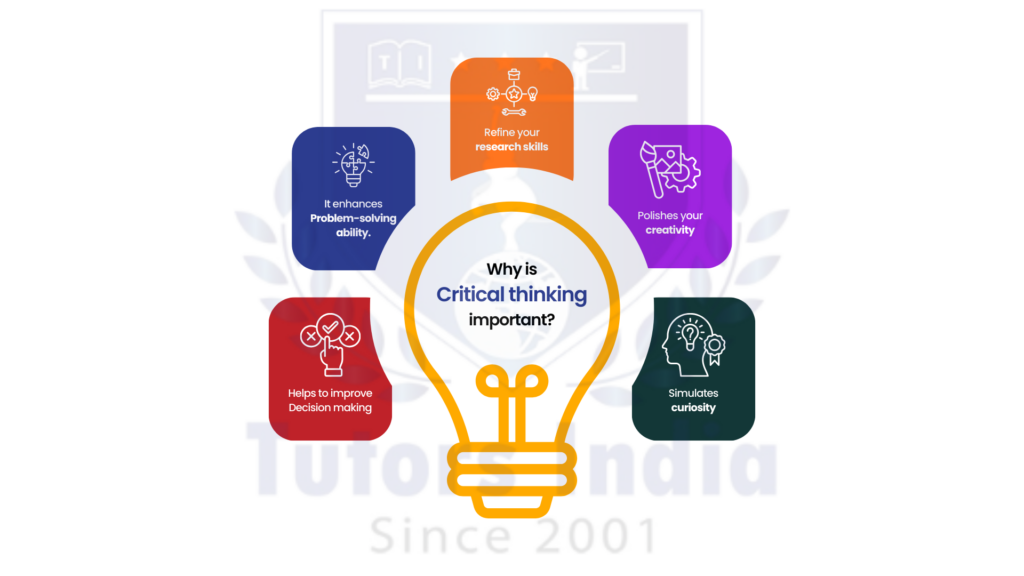
In the UK, universities expect students to analyse, evaluate and synthesise all sources of information before writing another paper or a research report.[3]
3. Poor Research Design and Methodology
Another key contributor to the failure of a dissertation is substandard or poorly defined methodology. Examiners evaluate whether research methods have been selected, justified, and applied correctly, and they penalise avoidable research methodology errors. [4]
Some of the typical shortcomings include:
- An unclear research design.
- Unacceptable data collection methods involving questionnaire or survey research.
- Insufficiently sized or supporter samples that are not justified adequately.
- Failure to consider ethical issues.
- Incomplete techniques for data analysis.
When methodology is not clear or is administered improperly, it diminishes the doctoral dissertation’s entire credibility.
4. Inadequate Academic Writing and Structure
The presentation of your research is just as important as the quality of the research itself. Many students find academic writing conventions difficult to adhere to, which creates ongoing dissertation writing problems.
Common areas where students have trouble with their writing:
- Informal language or unclear
- Poor paragraph structure
- Poor flow of arguments throughout your chapters
- Grammatical errors and spelling
- Inconsistent referencing style
Furthermore, poor organisation (i.e. unclear introductions or conclusions) can create confusion and may result in lower marks from examiners.[5]
5. Failure to Demonstrate Original Contribution
Examiners at the post-graduate level, particularly for master’s and PhD level documents, should have some level of originality. At post-graduate level, students frequently do not do the following:
- Clearly identify a research gap
- Provide an explanation of how their study contributes to existing knowledge
- Justify the significance of their findings and contribution.
In UK assessment standards, even small levels of originality such as applying an existing theory in a new context count towards meeting UK dissertations marking criteria and avoiding common dissertation mistakes.
6. Poor Time Management and Late Revisions
Dissertation quality is greatly impacted by time restraints. Students often complete the final critical phases (editing, proofreading, supervisor feedback) at the last minute, creating avoidable dissertation writing problems.
The consequences of this practice include:
- Failure to resolve supervisor comments
- Formatting and reference errors
- Weak conclusions
- Limited self-reflection on the results
To meet UK dissertations marking criteria, effective time management is essential.
7. Common Reasons for Failure: Summary Table
Area Assessed | Common Student Issues | Impact on Marks |
Understanding criteria | Misinterpreting expectations | Misaligned content |
Critical analysis | Descriptive writing | Lower analytical scores |
Methodology | Poor justification | Reduced credibility |
Weak structure & language | Clarity penalties | |
Originality | No clear contribution | Lower grade ceiling |
Time management | Rushed submission | Avoidable errors |
8. How Students Can Improve Alignment with Marking Criteria
To enhance dissertation success, the student will benefit from targeted dissertation support UK services and the following actions: [6]
- Examine the marking rubrics early in addition to rereading throughout the writing process
- Make strategic use of supervisor feedback
- Concentrate on critical evaluation rather than a mere description of the research
- Clearly justify the choice of method used
- Manage your time to allow for adequate editing and proofreading
- Have the dissertation meet the criteria of ethical standards, formatting and references
Academic support services assist students in understanding and applying the marking criteria and improving weak areas.
Conclusion
To enhance dissertation success, the student will benefit from targeted dissertation support UK services and the following actions: [6]
- Examine the marking rubrics early in addition to rereading throughout the writing process
- Make strategic use of supervisor feedback
- Concentrate on critical evaluation rather than a mere description of the research
- Clearly justify the choice of method used
- Manage your time to allow for adequate editing and proofreading
- Have the dissertation meet the criteria of ethical standards, formatting and references
Academic support services assist students in understanding and applying the marking criteria and improving weak areas.
References
- (2023, March 21). Why do students fail in their dissertation writing. The Student Helpline. https://thestudenthelpline.com.au/blog/why-do-students-fail-in-their-dissertation-writing.php
- Patrias K, author; Wendling D, editor. Citing Medicine: The NLM Style Guide for Authors, Editors, and Publishers [Internet]. 2nd edition. Bethesda (MD): National Library of Medicine (US); 2007-. Chapter 5, Dissertations and Theses. 2007 Oct 10 [Updated 2015 Aug 11]. Available from: https://www.ncbi.nlm.nih.gov/books/NBK7267/
- Chander N. G. (2021). Critical evaluation of publications. Journal of Indian Prosthodontic Society, 21(1), 1–2. https://doi.org/10.4103/jips.jips_597_20
- Soumerai, S.B., Ceccarelli, R. & Koppel, R. False Dichotomies and Health Policy Research Designs: Randomized Trials Are Not Always the Answer. J GEN INTERN MED 32, 204–209 (2017). https://doi.org/10.1007/s11606-016-3841-9
- Challenges encountered by college students in academic writing. (n.d.). Rsisinternational.org. Retrieved January 30, 2026, from https://rsisinternational.org/journals/ijriss/articles/challenges-encountered-by-college-students-in-academic-writing/
Khan, H. F., Qayyum, S., Beenish, H., Khan, R. A., Iltaf, S., & Faysal, L. R. (2025). Determining the alignment of assessment items with curriculum goals through document analysis by addressing identified item flaws. BMC medical education, 25(1), 200. https://doi.org/10.1186/s12909-025-06736-4