
How to Overcome Master’s Dissertation Challenges Related to Anxiety and Fear of Feedback
How to Overcome Master’s Dissertation Challenges Related to Anxiety and Fear of Feedback
- Home
- How To Article
- How to Overcome Master’s Dissertation Challenges Related to Anxiety and Fear of Feedback

How to Overcome Master’s Dissertation Challenges Related to Anxiety and Fear of Feedback
Creating a master’s dissertation will challenge your intellect and will likely mean enduring significant emotional strain. Anxiety, self-doubt, and fear of critical evaluation (by your supervisor and/or examiners) are amongst the most frequent psychological hurdles experienced by postgraduate students. This emotional barrier can affect productivity, motivation and ultimately, the standard of their research work. Addressing these issues is crucial for students who want to write a high-quality and well-structured academic dissertation. This article on Overcoming master’s Dissertation Challenges Caused by Anxiety and Supervisor Feedback Fear provides practical suggestions for overcoming reasons for anxiety when completing a dissertation and how to manage constructive Thesis feedback effectively. Many students also explore academic guidance such as master’s Dissertation writing services, Dissertation writing help UK, or Custom dissertation help to strengthen their writing confidence and manage feedback constructively.[1]
1. Understanding Dissertation Anxiety and Fear of Feedback
Students who are writing their dissertations often experience anxiety about the process due to the combination of high expectations, a short time frame in which to complete the project, and the expectation to create something new. The fear of receiving negative feedback from their supervisor is a major source of anxiety for many students because they interpret the feedback they receive from their supervisor as being indicative of their abilities, rather than an opportunity to improve. Reviewing a Dissertation supervisor feedback example or seeking Thesis help UK can help students better understand feedback expectations. [2]
- Fear of academic failure or poor grades
- Perfectionism and unrealistic expectations
- Lack of confidence in their ability to conduct research or produce effective writing
- Lack of clarity about their supervisor’s expectations
- Feeling isolated while conducting the research for their dissertation
If these emotional issues are not addressed early on, they can lead to procrastination, avoidant behaviour about obtaining feedback from their supervisor, and poor academic performance.
2. Impact of Anxiety on Dissertation Progress
Anxiety and fear of feedback can affect multiple stages of dissertation writing. Students may delay submitting drafts, avoid communicating with supervisors, or struggle to make revisions after receiving comments.[3]
2.1 Effects of Anxiety on Dissertation Writing
| Area of Dissertation | Impact of Anxiety | Possible Outcome |
|---|---|---|
| Topic development | Overthinking and indecision | Delay in proposal approval |
| Literature review | Fear of inadequacy | Lack of critical analysis |
| Writing drafts | Perfectionism and hesitation | Slow progress |
| Supervisor feedback | Avoidance of revisions | Repeated errors |
| Final submission | Stress and burnout | Reduced quality |
Recognising these effects helps students take proactive steps toward emotional and academic improvement.
3. Reframing Feedback as a Learning Tool
One of the best ways to reduce the fear associated with receiving feedback is to change the way it is thought about from a negative to a positive thing (i.e. constructive academic process) vs. receiving criticism. Feedback from a supervisor helps provide clarity, improve your argument and add rigour to your methodology. Many students who seek British dissertation help or Dissertation writing help UK often learn effective ways to interpret and apply feedback constructively.[4]
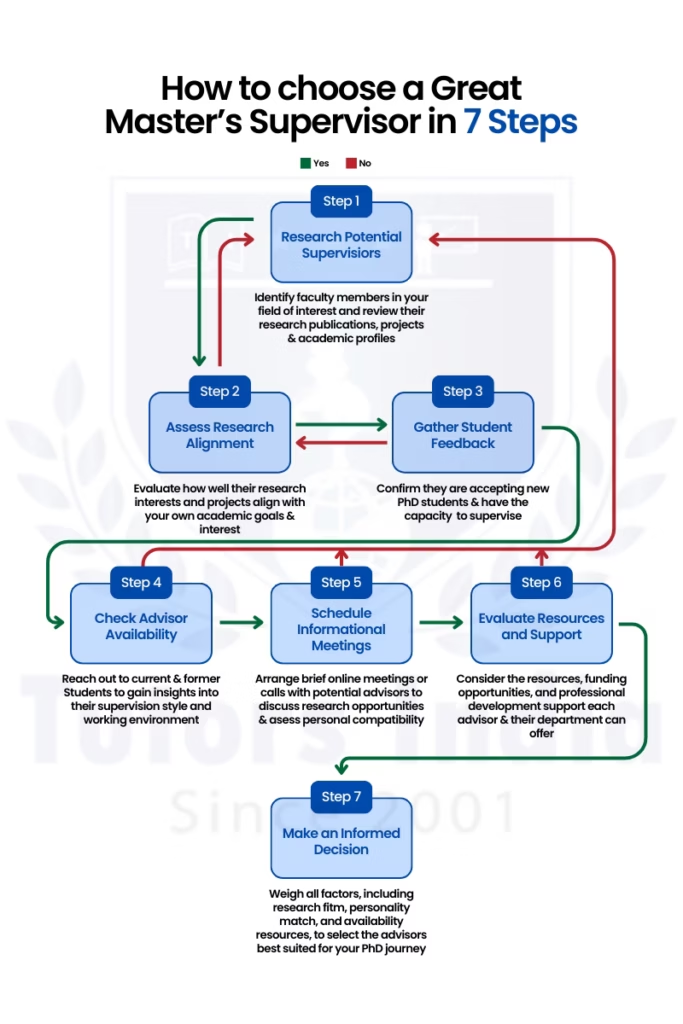
4. Practical Strategies to Manage Dissertation Anxiety
| Strategy | Key Focus | Concise Action Points |
|---|---|---|
| Develop a Structured Writing Routine | Creating consistency and reducing overwhelm |
Set realistic weekly writing goals
|
| Build Confidence Through Preparation | Strengthening academic readiness and reducing fear of feedback |
Become familiar with relevant academic literature
|
| Improve Communication with Supervisors | Reducing confusion and building academic support |
Schedule regular supervisor meetings
|
| Manage Emotional Well-Being | Maintaining mental health and productivity |
Take regular breaks during writing sessions
|
5. Developing a Positive Feedback Response System
Academic resilience refers to the ability to cope with challenges, pressure, and setbacks during academic study. Students who develop resilience can better manage criticism and use feedback to improve their work.
Ways to build academic resilience
- Accept that revisions and edits are part of the research and thesis process
- Create clear action steps to improve based on past mistakes
- Maintain a long-term focus on academic goals
- Seek guidance from instructors when needed
Resilient students view challenges as opportunities for growth rather than obstacles.
6. Building Academic Resilience
Students can create a structured approach to handling feedback to reduce anxiety and improve efficiency. [5]
Constructive Feedback Response Plan:
- Read feedback calmly – Helps reduce emotional reactions and improves focus
- Categorise comments (major/minor) – Identifies priorities for revision
- Ask for clarification if needed – Prevents misunderstandings
- Create a clear revision plan – Improves organisation and workflow
- Implement changes gradually – Builds confidence and maintains motivation
This structured approach transforms feedback into actionable steps rather than overwhelming criticism and is often recommended by master’s Dissertation writing services and British dissertation help providers.
Conclusion
A lot of students struggle with anxiety and fear of receiving feedback about their master’s dissertation, but there are ways to manage these problems through effective organisation, positive mindset shifts and good communication. If a student views feedback as an opportunity to learn and builds good emotional health while developing a solid plan for revision, then the student’s confidence and performance will improve both academically and professionally. Additionally, once students have overcome their psychological disadvantages to complete their dissertations, they can develop long-term scholarly and professional development. Many students also explore academic support such as Dissertation writing help UK, Custom dissertation help, or British dissertation help to strengthen their dissertation journey and manage supervisor feedback with confidence.
How to Overcome Master’s Dissertation Challenges Related to Anxiety and Fear of Feedback. [Talk to a Dissertation Expert | Book a Free 15-Minute Consultation]
References
- Ma, Y., Yu, A., Ma, H., Zhao, Y., Liu, X., Zhai, H., & Gao, Y. (2024). A narrative review of anxiety regulation in PhD students based on Green model. Frontiers in psychology, 15, 1351386. https://doi.org/10.3389/fpsyg.2024.1351386
- He, C. Y. (2024). Navigating stress, anxiety, and mentorship: Challenges for students working on dissertations in the pandemic era. Journal of Professional Teacher Education, 2(1), 26–37. https://doi.org/10.12928/jprotect.v2i1.856
- McCurdy, B. H., Scozzafava, M. D., Bradley, T., Matlow, R., Weems, C. F., & Carrion, V. G. (2022). Impact of anxiety and depression on academic achievement among underserved school children: evidence of suppressor effects. Current psychology (New Brunswick, N.J.), 1–9. Advance online publication. https://doi.org/10.1007/s12144-022-03801-9
- Rattanapitoon, S. K., Rattanapitoon, N. K., Arunsan, P., & La, N. (2025). Reframing feedback practices in medical education: A commentary on student perceptions. Journal of family & community medicine, 32(4), 364–365. https://doi.org/10.4103/jfcm.jfcm_227_25
- Lloyd, R., Slade, M., Byng, R., Russell, A., Ng, F., Stirzaker, A., & Rennick-Egglestone, S. (2024). Characteristics of positive feedback provided by UK health service users: content analysis of examples from two databases. BMJ health & care informatics, 31(1), e101113. https://doi.org/10.1136/bmjhci-2024-101113