
What Common Mistakes Do Students Make When Justifying Methodology in a UK Research Proposal?
What Common Mistakes Do Students Make When Justifying Methodology in a UK Research Proposal?
- Home
- How To Article
- What Common Mistakes Do Students Make When Justifying Methodology in a UK Research Proposal?

What Common Mistakes Do Students Make When Justifying Methodology in a UK Research Proposal?
Justifying methodology is one of the most important parts of a methodology in research proposal in the UK, but often misunderstood by undergraduates, masters and PhD students. UK university researchers are required to clearly outline their methodology and provide a rationale for the methodology to address the research aims and objectives when writing a research proposal. Many proposals lose marks because students do not include a sufficient methodological rationale. [1]
his article looks at some of the common mistakes students make when justifying their methodology and how they can be corrected while creating a research proposal.
1. Understanding the Role of Methodology in a UK Proposal
In the methodology part of your dissertation, it will explain the way that you will conduct your research, and why you have selected specific methodologies as part of how to write research proposal effectively.[2]
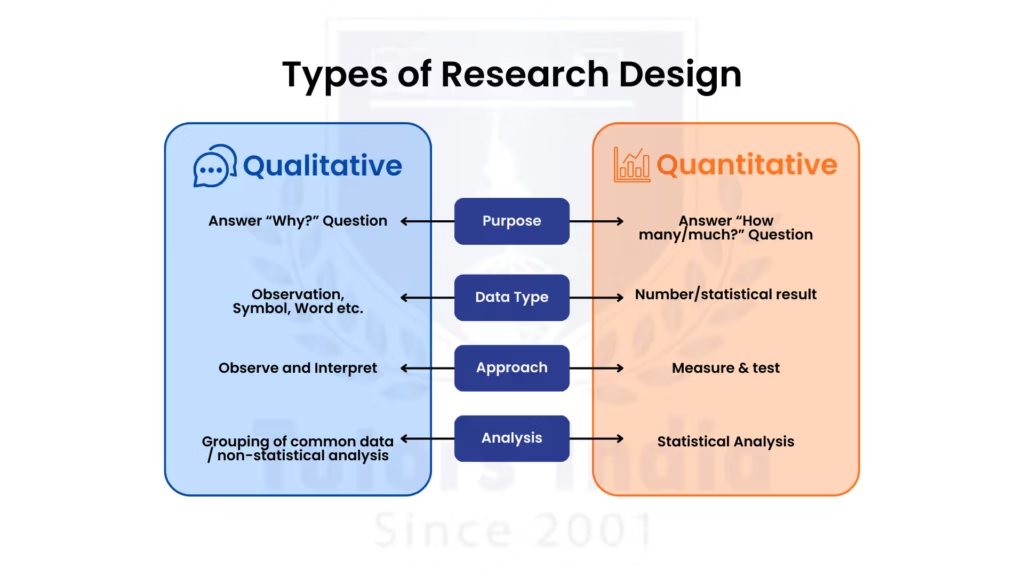
At UK universities, examiners will assess whether methodologies:
- are aligned with research aims and objectives
- can be feasibly completed within the timeframe and with available resources
- have been conducted in a manner that demonstrates academic rigour
- have been conducted ethically
Often, students will describe the methods that they intend to use but will not clearly explain why those methodologies are appropriate; this results in inadequate justification of the methodology and an overall lower mark in writing a research proposal.
2. Common Mistakes in Methodology Justification
2.1. Choosing Methods Without Clear Justification
One of the most common errors is choosing an approach to data collection without adequately justifying that the chosen approach suits the purpose of your research. For example, students often select surveys and interviews just because they are common and not because they are suited to the research question being investigated when creating a research proposal. Areas where typical problems arise include:
- Creating a methodology without explaining why qualitative, quantitative or mixed method approaches have been used
- Providing no connection between the aims of the research and the choice of methodology
- Copying a methodology from another study without modifying it to suit their own study
Examiners are looking for students to show that the way they have chosen to collect their data fully supports the objectives of their research, which is essential in any sample of a research proposal.
2.2. Confusion Between Research Methods and Methodology
Several errors students make, which lead to them not understanding research methods (example: interviews and surveys) as opposed to methodology (the overarching reason for having done the research), are:[3]
- Only describing a data collection tool
- Not stating what research philosophy/methodology was utilised
- Not stating what the research design was
A solid statement justifying one’s methodology should describe your research approach as well as what method(s) you used for completing your research in a methodology in research proposal.
2.3. Lack of Alignment with Research Questions
One of the most common issues within UK proposals is poor alignment of the research questions and research methodology. Examples of common misalignments include:
- Conducting exploratory research via quantitative methodology
- Using small samples for general studies
- Applying inappropriate analysis techniques to study data
If the research methods and research objectives do not match one another, examiners will question the validity of the study when reviewing a sample of a research proposal.
Common Mistake | Why It Happens | How to Avoid It |
No justification for methods | Limited research understanding | Link methods to research objectives |
Confusing methodology and methods | Lack of academic training | Explain the research approach clearly |
Poor alignment with questions | Weak proposal planning | Match methods to research aims |
Ignoring research philosophy | Limited theoretical knowledge | Include research paradigm |
Overly complex methods | Trying to impress examiners | Choose realistic, feasible methods |
2.4. Ignoring Research Philosophy and Approach
Students at some UK universities may be required to show an understanding of research philosophies like positivism, interpretivism and pragmatism. However, in most instances, students either provide generic definitions or fail to link them back to their studies when writing a research proposal. Having a clear understanding of research philosophies gives your methodology a stronger foundation.
2.5. Overly Ambitious or Unrealistic Methodology
Several students present research proposals that are challenging to implement due to time constraints, available resources and feasibility of the proposed designs. Examples of such proposals are: [4]
- Use of complicated survey methodologies for many respondents without having an adequate population sample
- Conducting complex statistical analyses without adequate training
- Using multiple research methods when time is limited. The review panels generally prefer proposals that are achievable and can realistically be implemented.
2.6. Weak Sampling Justification
Justification should be made for all sampling. Common errors include:
- no explanation as to why the sample size was determined
- failure to discuss the sampling method used
- no justification for the selection of subjects
For students to justify why the sample selected is adequate and appropriate to address the research question.
2.7. Insufficient Explanation of Data Analysis
Most students appear to spend most of their time collecting data, with little or no time spent on analysing their data. Weak proposals may: [5]
- Indicate an analysis method without any further description.
- Fail to link the analysis method to their research objectives.
- Do not mention software or the analytical framework used.
A good methodology will provide a clear explanation of how, and by what means, the data that has been collected will be analysed and interpreted.
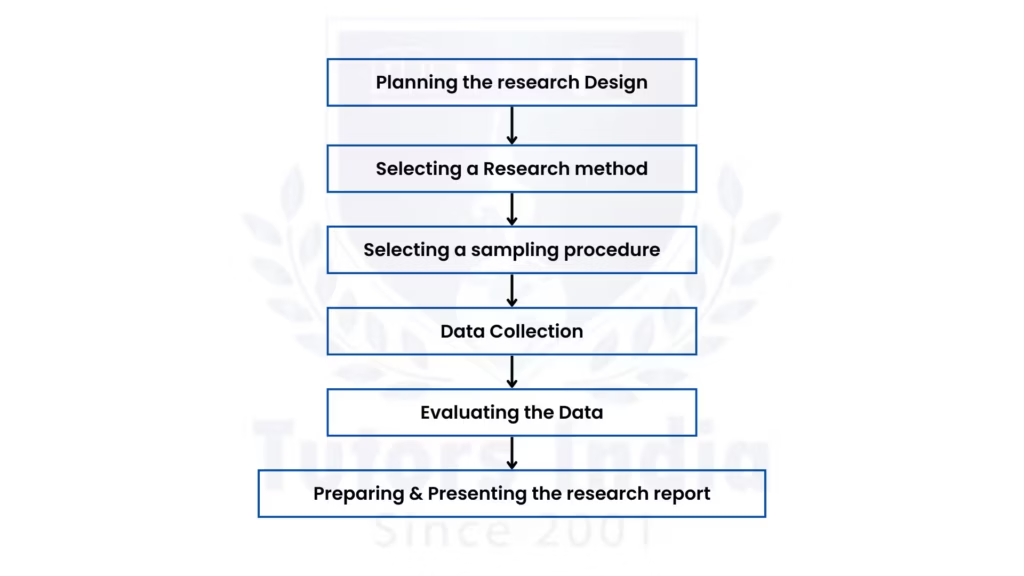
3. Visual Overview: Methodology Justification Process
4. How Students Can Strengthen Methodology Justification
To enhance the methodology section of a dissertation, students should pay attention to clarity and alignment.
| Helpful Tips |
|
| What Examiners Expect |
|
Complying with these expectations will enhance the quality of any sample of a research proposal.
Conclusion
Justifying a methodology is very important when preparing a research proposal in the UK; however, many students have difficulty justifying their chosen methodologies because they do not fully understand what is required in a methodology in a research proposal. Common errors include choosing inappropriate methods, ignoring research philosophy, and failing to explain sampling and analysis clearly.
If students provide a solid justification for their methodology, develop a realistic research plan, and align it with research objectives, they will improve their chances of success when writing a research proposal and achieve stronger academic outcomes overall.
What Common Mistakes Do Students Make When Justifying Methodology in a UK Research Proposal? [Talk to a Dissertation Expert | Book a Free 15-Minute Consultation]
References
- Schwab, S., Janiaud, P., Dayan, M., Amrhein, V., Panczak, R., Palagi, P. M., Hemkens, L. G., Ramon, M., Rothen, N., Senn, S., Furrer, E., & Held, L. (2022). Ten simple rules for good research practice. PLoS computational biology, 18(6), e1010139. https://doi.org/10.1371/journal.pcbi.1010139
- Crooks, N., Abboud, S., Jeremiah, R., & Matthews, A. K. (2024). Writing Qualitative Research Proposals Using the Pathway Project Mapping Tool. International Journal of Qualitative Methods, 23. https://doi.org/10.1177
- Hyett, N., Kenny, A., & Dickson-Swift, V. (2014). Methodology or method? A critical review of qualitative case study reports. International journal of qualitative studies on health and well-being, 9, 23606. https://doi.org/10.3402/qhw.v9.23606
- Shepperd, J. A., Waters, E., Weinstein, N. D., & Klein, W. M. (2015). A Primer on Unrealistic Optimism. Current directions in psychological science, 24(3), 232–237. https://doi.org/10.1177/0963721414568341
- Perez-Lloret, S., Enet, A., & Gonzalez-Alemán, G. (2024). Tools for Data Analysis. Movement disorders clinical practice, 11 Suppl 3(Suppl 3), S31–S35. https://doi.org/10.1002/mdc3.14092