
What Statistical Techniques Can a master’s Dissertation Employ to Evaluate Predictive Analytics in Strategic Decision-Making?
What Statistical Techniques Can a master’s Dissertation Employ to Evaluate Predictive Analytics in Strategic Decision-Making?
- Home
- How To Article
- What Statistical Techniques Can a master’s Dissertation Employ to Evaluate Predictive Analytics in Strategic Decision-Making?
Table of Content
- Role of Predictive Analytics in Strategic Decision-Making
- Regression Analysis in Predictive Research
- Time Series Analysis for Forecasting
- Correlation Analysis in Strategic Evaluation
- Machine Learning and Predictive Modelling
- Comparative Overview of Statistical Techniques
- Steps to Apply Statistical Techniques in a Dissertation
- Challenges Faced by master’s Students
- Conclusion

What Statistical Techniques Can a master’s Dissertation Employ to Evaluate Predictive Analytics in Strategic Decision-Making?
Strategic decision-making is increasingly relying on predictive analytics as businesses continue to use predictive modelling techniques across multiple industries including finance, health care, marketing, and operations. Therefore, students working on their master’s dissertations, particularly those focusing on Statistical Techniques for Predictive Analytics in UK Master’s Dissertations, should possess a solid knowledge of how to utilise statistical methodologies for the purpose of interpreting data patterns and predicting future results through predictive analytics evaluation. By utilising appropriate statistical methodology, including Statistics and hypothesis testing and proper statistical tools such as Statistical analysis using SPSS, students will be able to improve the quality of their research while ensuring that data analysis results align with sound strategic decision-making.[1]
1. Role of Predictive Analytics in Strategic Decision-Making
By using a combination of data trends from the past, statistical methods, and computer models based on previous experiences to forecast what will happen in the future through predictive analytics, organisations can use predictive analytics in decision-making to:[2]
- forecast changes in the marketplace
- identify potential risk and opportunity
- enhance operational efficiency
- make decisions based on fact, not guesswork
Dissertations for graduate students often analyse predictive models in relation to organisational strategy and may include a practical Strategic decision-making example to demonstrate real-world application.
2. Regression Analysis
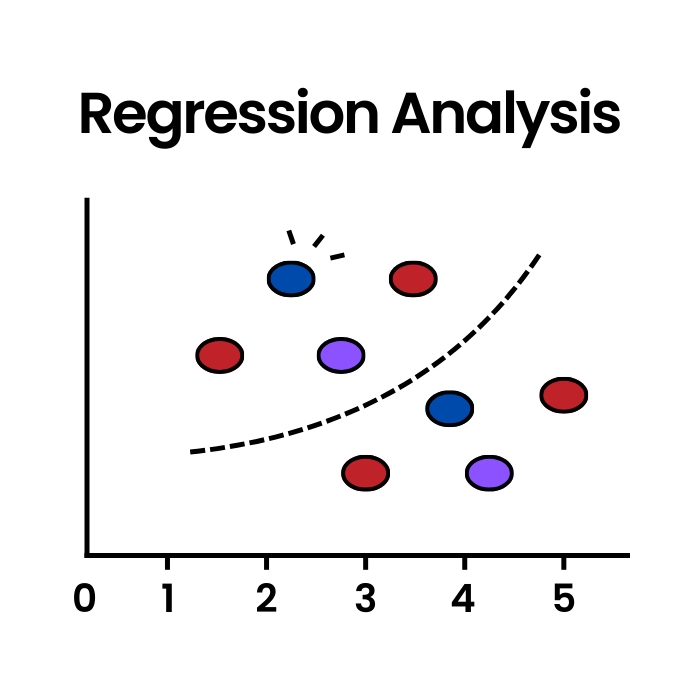
Regression analysis is one of the most widely used statistical methods in predictive analytics. It examines the relationship between a dependent variable and one or more independent variables to forecast outcomes. [3]
- Linear Regression – Predicts a continuous outcome (e.g., sales forecasting).
- Multiple Regression – Examines multiple predictors simultaneously.
- Logistic Regression – Predicts categorical outcomes (e.g., yes/no).
In student dissertations, regression analysis supports financial forecasting, customer behaviour analysis, and market demand modelling, often supported through SPSS and data analysis software tools.
A research aim (example):
To assess the impact of child online safety laws in the UK on the revenues generated and the levels of stakeholder trust experienced by social media companies.
3. Time Series Analysis
Time series analysis examines data collected over time to understand historical performance and predict future outcomes. [4]
Analysis techniques | Dissertation applications |
|
|
Time series forecasting is commonly included in Statistical Techniques for Predictive Analytics in UK Master’s Dissertation projects.
4. Correlation Analysis
Correlation analysis assesses how strongly two variables are related and the direction of their relationship. It plays an important role in Statistics and hypothesis testing. [5]
|
Benefits of Using Correlation Analysis |
|
|
Examples of How to Use Correlation Analysis in Your Dissertation |
|
5. Machine Learning and Predictive Modelling
Advanced master’s dissertation projects might use machine learning algorithms as an evaluation method for predictive analytics. [6]
- Decision trees
- Random forest models
- Neural networks
- Support vector machines
Using these methods will enhance your prediction accuracy and allow you to compare the performance of your models when making strategic decisions.
6. Statistical Techniques and Their Strategic Applications
Statistical Technique | Purpose | Example in Strategic Decision-Making |
Regression analysis | Predict relationships between variables | Sales and revenue forecasting |
Time series analysis | Analyse trends over time | Demand forecasting |
Correlation analysis | Measure variable relationships | Marketing and customer behaviour |
Decision trees | Classify and predict outcomes | Risk assessment |
Neural networks | Complex predictions | Market trend analysis |
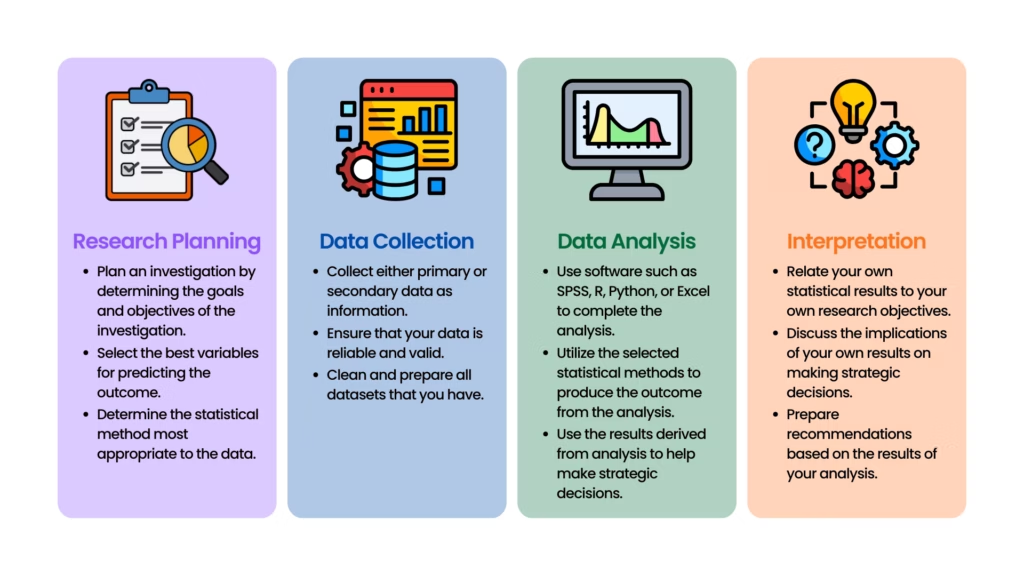
7. Steps for Applying Statistical Techniques in a Dissertation
Students can effectively use statistical techniques by following these steps, by following these steps for successful use of statistical methods, students will be able to:[7]
8. Challenges Faced by master’s Students
Students often face challenges when using statistical methods, including limited statistical knowledge, selecting the right technique, software difficulties, interpreting results, and making strategic decisions based on findings.
With appropriate supervision, practice, and possibly Statistics dissertation help, these issues can be managed effectively.
Conclusion
Predictive analytics dissertations rely heavily on statistical techniques to evaluate strategic decision-making. Methods such as regression, time series analysis, correlation, and machine learning provide students with powerful analytical tools to interpret large datasets.
By applying proper Statistical Techniques for Predictive Analytics in a UK Master’s Dissertation, maintaining sound master’s ethical research practice, and using structured analytical tools such as Statistics and SPSS, students can produce rigorous, credible research. Whether through independent effort or supported by Custom dissertation writing guidance, mastering statistical techniques strengthens both academic performance and professional analytical skills.
What Statistical Techniques Can a master’s Dissertation Employ to Evaluate Predictive Analytics in Strategic Decision-Making? [Talk to a Dissertation Expert | Book a Free 15-Minute Consultation]
References
- Hjelle, S., Mikalef, P., Altwaijry, N., & Parida, V. (2024). Organizational decision making and analytics: An experimental study on dashboard visualizations. Information & Management, 61(6), 104011. https://doi.org/10.1016/j.im.2024.104011
- Zhang Z. (2020). Predictive analytics in the era of big data: opportunities and challenges. Annals of translational medicine, 8(4), 68. https://doi.org/10.21037/atm.2019.10.97
- Roustaei N. (2024). Application and interpretation of linear-regression analysis. Medical hypothesis, discovery & innovation ophthalmology journal, 13(3), 151–159. https://doi.org/10.51329/mehdiophthal1506
- Tomov, L., Chervenkov, L., Miteva, D. G., Batselova, H., & Velikova, T. (2023). Applications of time series analysis in epidemiology: Literature review and our experience during COVID-19 pandemic. World journal of clinical cases, 11(29), 6974–6983. https://doi.org/10.12998/wjcc.v11.i29.6974
- Janse, R. J., Hoekstra, T., Jager, K. J., Zoccali, C., Tripepi, G., Dekker, F. W., & van Diepen, M. (2021). Conducting correlation analysis: important limitations and pitfalls. Clinical kidney journal, 14(11), 2332–2337. https://doi.org/10.1093/ckj/sfab085