
How to Select Suitable Research Methodology Techniques When Preparing a master’s Research Proposal
How to Select Suitable Research Methodology Techniques When Preparing a master’s Research Proposal
- Home
- How To Article
- How to Select Suitable Research Methodology Techniques When Preparing a master’s Research Proposal
Table of Content
- Understanding Research Methodology in a Master’s Proposal
- Types of Research Methodology Techniques
- Mixed Methods Approach
- Factors to Consider When Selecting a Methodology
- Matching Research Methods with Research Goals
- Common Challenges Faced by master’s Students
- Step-by-Step Guide to Choosing the Right Methodology
- Importance of Justifying Methodology in a Proposal
- Conclusion

How to Select Suitable Research Methodology Techniques When Preparing a master’s Research Proposal
Having an appropriate research methodology is one of the most important steps in writing a master’s research proposal and understanding the research methodology for master’s research proposal is essential. If you have a high-quality methodology, you will be able to meet your research objectives, collect relevant data, and produce credible academic results. But many postgraduate students can’t determine which research methodology will best suit their research aims, subject, and university requirements when working through the scientific research process.[1]
This guide helps postgraduate students in selecting appropriate techniques for conducting research methodology and avoiding the most common mistakes when writing their Master’s theses or methodology in master’s dissertation development.
1. Understanding Research Methodology in a Master’s Proposal
Research methodology (also called research methodology) is the broad plan for conducting research (and answering research questions). When developing a master’s-level research proposal, students at universities must consider how well they justify their choice of research methodology and how appropriate the selected methodology is to their study.[2]
- Consistent with research objectives
- Realistic in terms of time frame available and resources available (i.e., access)
- Acceptable based on accepted, systematic, ethical and academic criteria
- Justifiable based on providing reliable and valid findings
In addition to explaining what methodology will be used, students must justify why it is the most suitable method for their research topic and align it with a clear dissertation methodology template when required by universities.
2. Visual Overview: Research Methodology Selection Process
Description: These visual highlights the process of selecting research methodology—from defining research objectives to choosing methods and analysing data. It helps students understand how research design connects with overall proposal development.
3. Types of Research Methodology Techniques
Qualitative Research Methods | Quantitative Research Methods |
Qualitative research is the study of human experience, opinions, and social phenomena and represents a key part of the qualitative research process. It is particularly useful for:
| Defining quantitative research involves understanding how numerical data and statistical analysis are used to test theories and relationships. Quantitative research is appropriate for:
|
Some of the most common qualitative research methods include:
| Common quantitative methods include the use of:
|
4. Mixed Methods Approach
A mixed-methods approach, also known as mixed research design, incorporates qualitative and quantitative techniques. This approach is useful when:
- Numbers and detailed insight need to be gathered
- Research involves complex issues
- There is a need to validate findings through different sources.
5. Factors to Consider When Selecting a Methodology
Before choosing a research methodology, students should consider the following factors related to the types of research methodology. [5]
- Nature of Research Problem.
- Type of Data Required.
- Time and Resources Available.
- Access to Participants and/or Data Sets.
- University Guidelines and Expectations (Policies).
Selecting a research methodology without considering these factors frequently results in limitations in future research.
6. Matching Research Methods with Research Goals
Research Goal | Recommended Methodology | Example Technique |
Explore opinions or experiences | Qualitative | Interviews, focus groups |
Measure trends or relationships | Quantitative | Surveys, statistical analysis |
Combine insights and data | Mixed methods | Survey + interviews |
Evaluate a specific case | Qualitative | Case study analysis |
Test hypotheses | Quantitative | Experiments, regression analysis |
7. Common Challenges Faced by master’s Students
Most graduate students have trouble selecting research methods due to limited experience with types of research methodology. Common problems include:
- Not knowing whether to use qualitative or quantitative research methods
- No justification of their research method
- Limited prior experience with analysing data
- How to align their research objective with their methodology
- Confusion about input/output sampling
All these difficulties can contribute to either rejection of the proposal or being asked to revise their proposal.
8. How to Choose the Right Methodology
Step-by-Step Approach | objectives |
Clearly define your research objectives. | Define your research questions to be specific and measurable. |
Review the current literature. | Examine how past research in your area has dealt with the same or similar topics. |
Identify what data you need for your study. | Determine whether you need numerical data, qualitative opinions, or both for completing your research.
|
Consider the feasibility of your study. | Consider time, access to subjects for your study, and the resources available to complete your research.
|
Discuss your methodology with your supervisor for feedback. | Asking for feedback from your supervisor at an early point in your research can help reduce the number of revisions later. |
Following a structured scientific research process helps reduce errors and improve proposal quality.
9. Visual Comparison of Research Methods
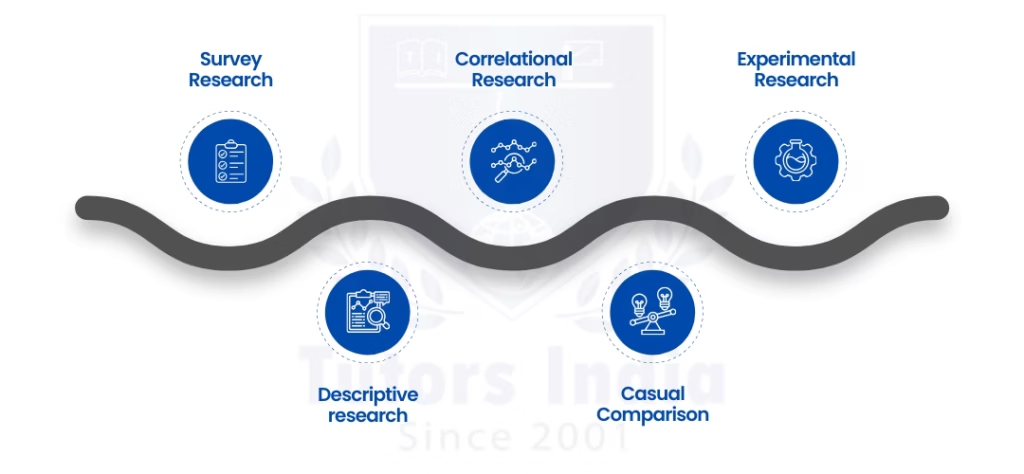
Description: This visual comparison highlights differences between qualitative, quantitative, and mixed methods research. It helps students understand which approach best suits their research objectives. [6]
Conclusion
Selecting an appropriate research methodology is crucial when preparing a successful master’s research proposal. The choice must align with research objectives, literature review insights, and feasibility considerations to produce reliable and meaningful results.
A properly justified research methodology for master’s research proposal strengthens academic credibility and builds a solid foundation for a high-quality dissertation. With proper planning, understanding of methods vs methodology, and awareness of different types of research methodology, postgraduate students can confidently complete this critical stage of their academic journey.
How to Select Suitable Research Methodology Techniques When Preparing a master’s Research Proposal? [Talk to a Dissertation Expert | Book a Free 15-Minute Consultation]
References
- Dahal, N., Neupane, B. P., Pant, B. P., Dhakal, R. K., Giri, D. R., Ghimire, P. R., & Bhandari, L. P. (2024). Participant selection procedures in qualitative research: experiences and some points for consideration. Frontiers in research metrics and analytics, 9, 1512747. https://doi.org/10.3389/frma.2024.1512747
- Sudheesh, K., Duggappa, D. R., & Nethra, S. S. (2016). How to write a research proposal?. Indian journal of anaesthesia, 60(9), 631–634. https://doi.org/10.4103/0019-5049.190617
- Tenny S, Brannan JM, Brannan GD. Qualitative Study. [Updated 2022 Sep 18]. In: StatPearls [Internet]. Treasure Island (FL): StatPearls Publishing; 2025 Jan-. Available from: https://www.ncbi.nlm.nih.gov/books/NBK470395/
- Slater, P., & Hasson, F. (2025). Quantitative Research Designs, Hierarchy of Evidence and Validity. Journal of psychiatric and mental health nursing, 32(3), 656–660. https://doi.org/10.1111/jpm.13135
- Bruno, V., Aquino, C., & Pringsheim, T. (2024). Selecting Research Methods to Address Clinical Questions. Movement disorders clinical practice, 11 Suppl 3(Suppl 3), S21–S25. https://doi.org/10.1002/mdc3.14088
- Scheer, J., Volkert, A., Brich, N., Weinert, L., Santhanam, N., Krone, M., Ganslandt, T., Boeker, M., & Nagel, T. (2022). Visualization Techniques of Time-Oriented Data for the Comparison of Single Patients With Multiple Patients or Cohorts: Scoping Review. Journal of medical Internet research, 24(10), e38041. https://doi.org/10.2196/38041
- Garg R. (2016). Methodology for research I. Indian journal of anaesthesia, 60(9), 640–645. https://doi.org/10.4103/0019-5049.190619