
Different Research Design Methods and How to Determine the Right One for Your French PhD Dissertation
Different Research Design Methods and How to Determine the Right One for Your French PhD Dissertation
- Home
- How To Article
- Different Research Design Methods and How to Determine the Right One for Your French PhD Dissertation

Different Research Design Methods and How to Determine the Right One for Your French PhD Dissertation
One of the key foundational elements of building a successful PhD dissertation is the selection of an effective Research Design for PhD Dissertation. In the French system of academia, where methodological and theoretical rigour are highly valued, the selection of an effective research design is an integral component of building a successful PhD dissertation. Research design is defined as a plan for collecting, analysing, and interpreting data to answer research questions. In the French system of academia, the selection of an effective research design must be integrated not only with the research question but also with the tradition of the discipline. [1]
1. Overview of Major Research Design Methods
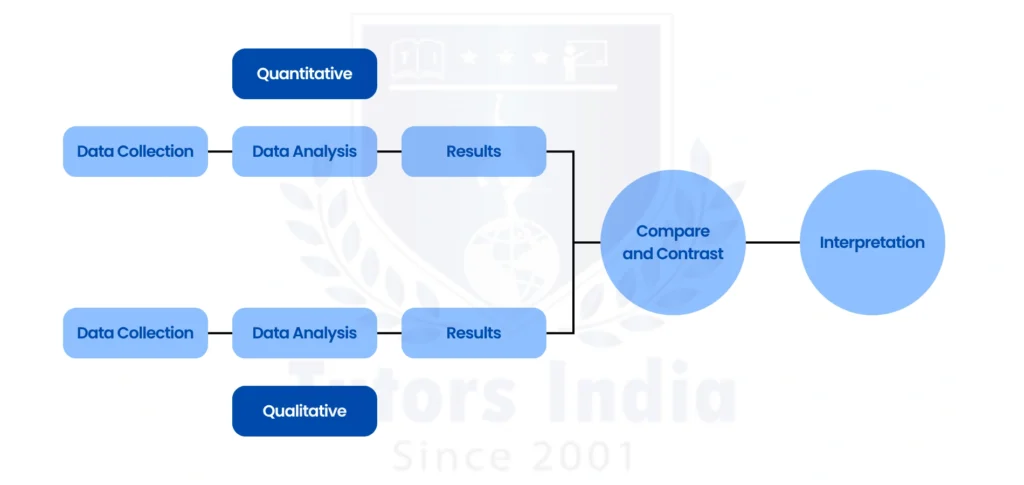
Research design methods are generally classified into three categories: qualitative research methodology, quantitative research methodology, and mixed methods. Each of these has its own benefits depending on the nature of the research.
Qualitative research is mainly an exploratory approach and aligns closely with descriptive research design. It is generally interpretive and mostly used in the social sciences such as sociology, literature, and anthropology. In these areas of study, the research is mostly qualitative. [2]
On the contrary, quantitative research is based on the positivist approach. It is mainly focused on the measurement of variables and often incorporates experimental research design to test hypotheses. It is widely used in disciplines such as economics and psychology, relying heavily on statistical tools.
Finally, mixed research is a combination of both qualitative and quantitative approaches. It is a comprehensive approach and serves as a strong research design example when dealing with complex research questions that cannot be fully understood from a single perspective.
2. Comparative Table of Research Designs
| Research Design Type | Key Characteristics | Common Methods | Strengths | Limitations |
|---|---|---|---|---|
| Qualitative | Interpretive, exploratory, context-specific | Interviews, focus groups, textual analysis | Deep insights, flexibility | Subjectivity, limited generalizability |
| Quantitative | Structured, hypothesis-driven, statistical | Surveys, experiments, datasets | Objectivity, replicability | Limited depth, rigid structure |
| Mixed Methods | Integrative, comprehensive | Combination of qualitative and quantitative tools | Balanced perspective, triangulation | Complexity, time-intensive |
3. Determining the Right Research Design
To select an appropriate Research Design for PhD Dissertation, it is imperative to ensure alignment between the research question, theoretical underpinning, and available resources.[3]
The first step is to establish the nature of the research problem. Questions of an exploratory nature seeking to establish “how” or “why” something occurs are best addressed using qualitative research methodology. In contrast, questions aiming to identify relationships between variables are better suited to quantitative research methodology, often involving experimental research design.
It is also essential to establish the epistemological position of the researcher. French academia is often characterised by strong theoretical foundations, requiring alignment with constructivist, interpretivist, or positivist paradigms.
Practical considerations also play a role. Time constraints, access to data, and methodological expertise must be considered. For instance, quantitative approaches may require advanced statistical tools and datasets that are not always readily accessible.
4. Role of Discipline and Institutional Expectations
In France, disciplinary norms significantly influence methodological choices. Humanities and social sciences tend to favour qualitative research methodology and descriptive research design, whereas scientific disciplines rely more on quantitative research methodology and experimental research design.[4]
Doctoral candidates must not only understand these norms but also justify any deviations or innovations. Supervisors and doctoral committees play a crucial role in shaping methodological decisions. Engaging with them early ensures that the research aligns with academic expectations and contributes meaningfully to the discipline.
Many candidates also seek guidance from Master’s Dissertation Services when transitioning into doctoral-level research, especially for refining methodology and structure.
5. Integrating Research Design with Dissertation Structure
A well-developed Research Design for PhD Dissertation must be clearly integrated into the dissertation structure. The methodology chapter should provide a detailed rationale for the chosen approach. [5]
In the French academic system, strong emphasis is placed on methodological justification. Candidates are expected to demonstrate both technical competence and theoretical depth, often supported by a clear research design example to validate their approach.
These visuals illustrate how research methodology progresses from theoretical foundation to data analysis.
Conclusion
Choosing the appropriate Research Design for PhD Dissertation is a complex yet essential process. Whether adopting a qualitative research methodology, quantitative research methodology, or a mixed approach involving experimental research design or descriptive research design, it is crucial that the research design aligns with the research objectives.
Additionally, the selected design must contribute to broader academic discourse. To achieve this, PhD scholars must critically evaluate their research questions and ensure methodological coherence throughout their work.
Different Research Design Methods and How to Determine the Right One for Your French PhD Dissertation. [Talk to a Dissertation Expert | Book a Free 15-Minute Consultation]
References
- Wright, S., O’Brien, B. C., Nimmon, L., Law, M., & Mylopoulos, M. (2016). Research Design Considerations. Journal of graduate medical education, 8(1), 97–98. https://doi.org/10.4300/JGME-D-15-00566.1
- Chidambaram, A. G., & Josephson, M. (2019). Clinical research study designs: The essentials. Pediatric investigation, 3(4), 245–252. https://doi.org/10.1002/ped4.12166
- Slater, P., & Hasson, F. (2025). Quantitative Research Designs, Hierarchy of Evidence and Validity. Journal of psychiatric and mental health nursing, 32(3), 656–660. https://doi.org/10.1111/jpm.13135
- Krskova, H., Baumann, C., & Breyer, Y. A. (2024). Shaping individual competitiveness: The role of discipline, parental expectations, and participation in extracurricular activities. Heliyon, 10(10), e31042. https://doi.org/10.1016/j.heliyon.2024
- Fetters, M. D., Curry, L. A., & Creswell, J. W. (2013). Achieving integration in mixed methods designs-principles and practices. Health services research, 48(6 Pt 2), 2134–2156. https://doi.org/10.1111/1475-6773.12117