
Different Types of Data Analysis Methods and How to Choose the Best One for Your Master’s Thesis in Ireland
Different Types of Data Analysis Methods and How to Choose the Best One for Your Master’s Thesis in Ireland
- Home
- How To Article
- Different Types of Data Analysis Methods and How to Choose the Best One for Your Master’s Thesis in Ireland

Different Types of Data Analysis Methods and How to Choose the Best One for Your Master’s Thesis in Ireland
Choosing the most appropriate data analysis approach is an important step in the process of writing a successful master’s thesis in Ireland. Irish universities place significant emphasis on statistical analysis methods, which must be clear and consistent with the purpose of the research. Regardless of the nature of your research—qualitative, quantitative, or mixed—the data analysis approach employed plays an important role in validating your research. It is important to be aware of various approaches such as qualitative data analysis and quantitative data analysis to identify the most appropriate one. Many students also seek master’s thesis help or master’s thesis writing services to strengthen their analytical approach.[1]
1. Understanding Data Analysis in Irish Master’s Research
In Ireland, the postgraduate research is evaluated according to the level of justification that the student provides for the choices that he or she makes during the research and the level of analytical skill that the student displays. The analysis of the data is not just about the manipulation of the data; it is about the interpretation of the data that meets the objectives of the research.[2]
The key expectations from the student during the analysis of the data are:
- The objectives and the analysis technique need to match
- The explanation of the analytical technique needs to be clear
- The interpretation of the results needs to be logical
- The tools used should be appropriate, including SPSS data analysis tools, NVivo, and Excel
2. Types of Data Analysis Methods
2.1. Qualitative Data Analysis
Qualitative data analysis deals with non-numerical data such as interviews, observations, and textual materials. [3]
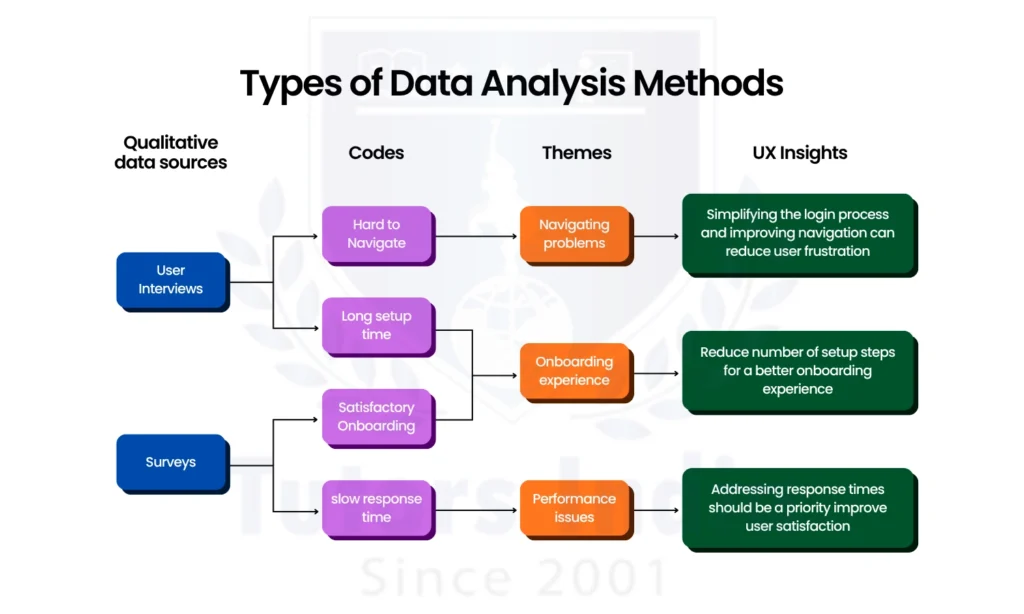
Qualitative analysis deals with non-numerical data, e.g., interviews, observations, and text materials. Techniques of qualitative analysis include:
- Thematic analysis
- Content analysis
- Discourse analysis
Qualitative analysis is best suited for:
- Exploratory research
- Social sciences and humanities
2.2. Quantitative Data Analysis
Quantitative data analysis focuses on numerical data and statistical analysis methods.[4]
Common techniques:
- Descriptive statistics
- Inferential statistics (regression, correlation)
- Hypothesis testing
Best suited for:
- Testing theories
- Large data sets
- Measurable variables
2.3. Mixed-Methods Analysis
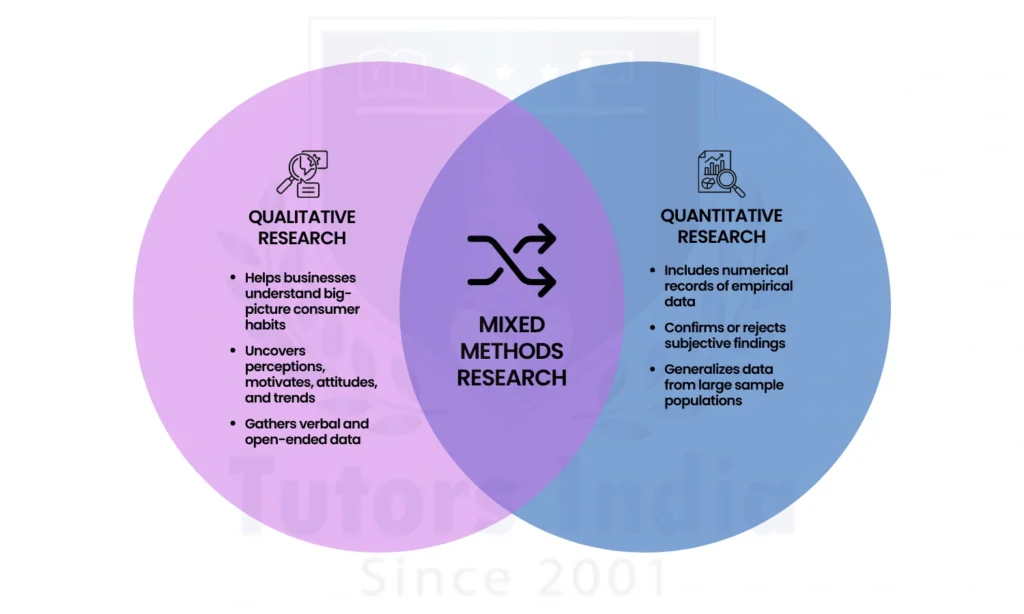
The combination of both qualitative and quantitative approaches is known as mixed methods.
Advantages:
- Comprehensive insights are provided
- Balance is maintained
Best suited for:
- Complex problems
- Interdisciplinary studies
3. Comparison of Data Analysis Methods
| Method | Data Type | Strengths | Limitations |
|---|---|---|---|
| Qualitative | Textual/Visual | In-depth insights | Subjective interpretation |
| Quantitative | Numerical | Objective and measurable results | Limited contextual depth |
| Mixed-Methods | Both | Comprehensive understanding | Time-consuming and complex |
4. How to Choose the Best Method for Your Thesis
The selection of an appropriate method depends on several key factors, which are as follows:[5]
Research Questions:
- Exploratory research questions → Qualitative approach
- Hypothesis testing research questions → Quantitative approach
Data Availability:
- Interview/text data → Qualitative approach
- Survey/numbers of data → Quantitative approach
Research Objectives:
- Depth of understanding research objectives → Qualitative approach
- Generalisation research objectives → Quantitative approach
Time and Resources: A mixed methods approach requires more time and expertise
5. Common Challenges and Practical Tips
Some of the challenges students may encounter include: [6]
- Difficulty in choosing an appropriate method
- Lack of familiarity with analytical tools
- Incongruence between data and research questions
Practical tips:
- Consult your supervisor
- Familiarise yourself with similar theses in your discipline
- Familiarise yourself with appropriate software (SPSS, NVivo)
- Consider seeking master’s thesis help or master’s thesis writing services if needed
Conclusion
Understanding and applying the right data analysis technique is essential for producing a high-quality master’s thesis in Ireland. Whether using qualitative data analysis, quantitative data analysis, or a mixed approach, proper statistical analysis enhances research credibility and academic value.
With the correct use of SPSS data analysis tools and proper methodological justification, students can ensure strong research outcomes. Those needing additional support can benefit from master’s thesis writing services or master’s thesis help to improve the quality and accuracy of their research.
Evaluating Climate Adaptation Strategies in the Netherlands: Policy Effectiveness and Environmental Impact. [Talk to a Dissertation Expert | Book a Free 15-Minute Consultation]
References
- Simpson S. H. (2015). Creating a Data Analysis Plan: What to Consider When Choosing Statistics for a Study. The Canadian journal of hospital pharmacy, 68(4), 311–317. https://doi.org/10.4212/cjhp.v68i4
- Doyle, L., McCabe, C., Keogh, B., Brady, A., & McCann, M. (2020). An overview of the qualitative descriptive design within nursing research. Journal of research in nursing : JRN, 25(5), 443–455. https://doi.org/10.1177/17449871198
- Hamilton, A. B., & Finley, E. P. (2019). Qualitative methods in implementation research: An introduction. Psychiatry research, 280, 112516. https://doi.org/10.1016/j.psychres
- Slater, P., & Hasson, F. (2025). Quantitative Data Quality Assurance, Analysis and Presentation. Journal of psychiatric and mental health nursing, 32(3), 723–727. https://doi.org/10.1111/jpm.13143
- Eldawlatly, A. A., & Meo, S. A. (2019). Writing the methods section. Saudi journal of anaesthesia, 13(Suppl 1), S20–S22. https://doi.org/10.4103/sja.SJA_80
- Salari, H., Najm, F., Yazdankhahfard, M., & Esfandiari, A. (2024). Challenges, barriers and solutions for implementing clinical practice guidelines: a qualitative study in southern Iran. BMJ open quality, 13(3), e002595. https://doi.org/10.1136/bmjoq-2023-002595