
How Should Sample Size Be Determined for Cross-Sectional Business Studies in UK Master’s Dissertations?
How Should Sample Size Be Determined for Cross-Sectional Business Studies in UK Master’s Dissertations?
- Home
- How To Article
- How Should Sample Size Be Determined for Cross-Sectional Business Studies in UK Master’s Dissertations?
Table of Content
- Key Factors That Influence Sample Size
- Common Sample Size Guidelines in UK Master’s Business Dissertations
- Statistical Approaches to Determining Sample Size
- Practical Challenges Faced by UK Master’s Students
- How to Justify Sample Size in Your Dissertation
- Ethical and Practical Considerations
- Conclusions

How Should Sample Size Be Determined for Cross-Sectional Business Studies in UK Master’s Dissertations?
Choosing the appropriate sample size is an important methodological decision for master’s dissertations in the UK, particularly with respect to cross-sectional (or ‘snapshot’) business studies; these studies collect data only once (also referred to as having one ‘measurement’ point). In the context of sample size determination in UK master’s dissertation, this decision becomes central to methodological credibility. If your sample size is too small, then your statistical validity will be compromised; likewise, if your sample size is too large, it may not be feasible within your time and resource limitations. Students are required to justify sample sizes in the methodology chapter by explicitly relating them to the selected research design, population characteristics, and the analysis technique(s) to be used. In some cases, students may even report having no data for dissertation due to poor planning of the sampling strategy. [1]
The purpose of this article is to explain how sample sizes should be determined for cross-sectional business research and provide practical methodologies that would be appropriate in the context of the UK master’s dissertation setting.[2]
1. Understanding Cross-Sectional Design in Business Research
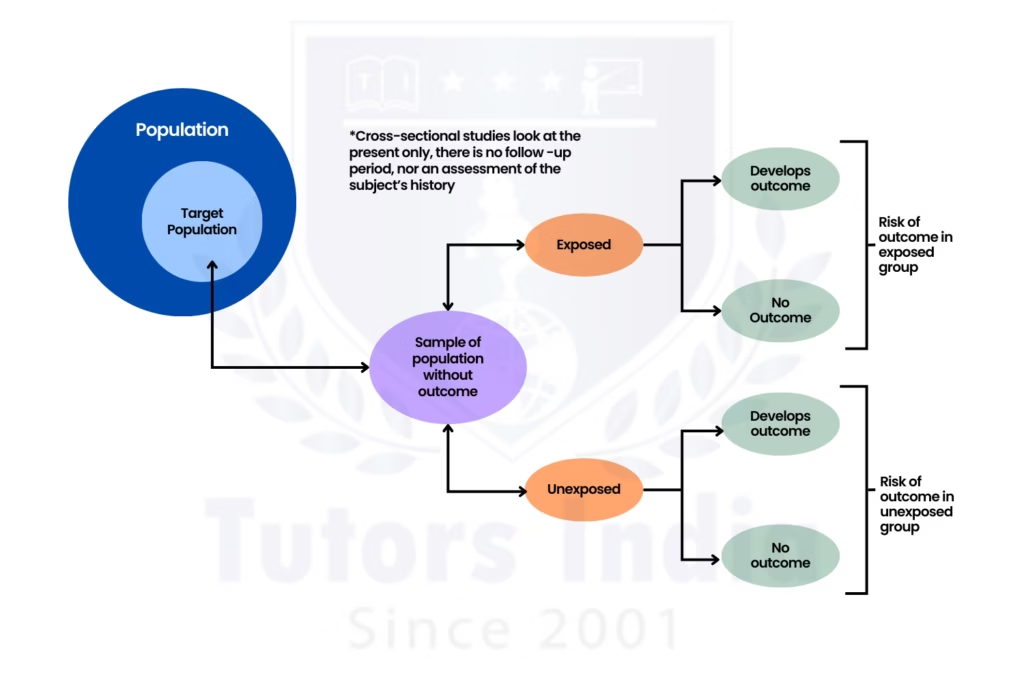
A cross-sectional study collects information from a defined group of people at one time. In UK business dissertations, this usually includes things like. [3]
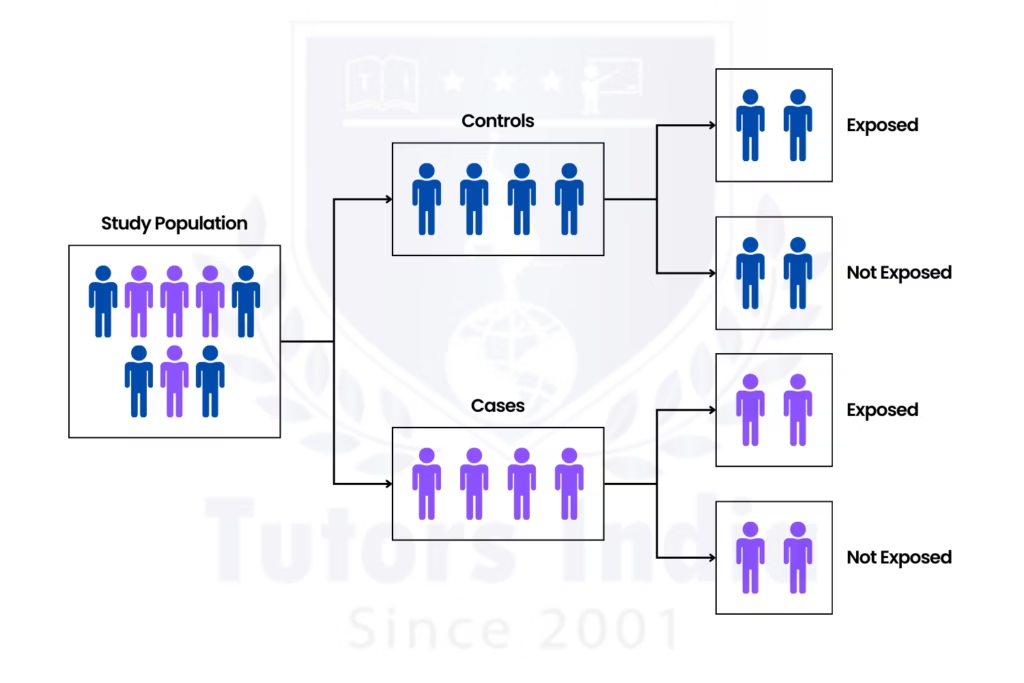
- Employees completing surveys,
- Customers telling us how satisfied they are with their purchase or service,
- Small and medium enterprise (SME) owners being interviewed (either in person or through the telephone, or through the internet),
- Market perception studies to understand how people perceive an SME in comparison to competitors (or other businesses).
To achieve the goal of identifying trends, patterns, and relationships at one time, selecting an appropriate sample size is critical to achieving statistical reliability and representativeness of the larger population. This is especially relevant when defining quantitative research within a business context.
2. Key Factors That Influence Sample Size
Sample size determination will not be random-based, but rather will be based on some methodological considerations: [4]
Research objectives
| Generally, a moderate sample size will suffice when conducting descriptive studies. When attempting to look at relationships between variables, using statistical techniques (e.g., regression analysis) typically warrants larger sample sizes. To achieve the goal of identifying trends, patterns, and relationships at one time, selecting an appropriate sample size is critical to achieving statistical reliability and representativeness of the larger population. This is especially relevant when defining quantitative research within a business context. |
Population size
|
|
Confidence level and margin of error | All UK dissertations generally state:
|
Type of data analysis | Correlation and regression require larger sample sizes than using simple descriptive statistics. |
Resource constraints | Due to the master’s dissertation limitations, examiners are expecting a realistic justification due to the following resource constraints:
|
3. Common Sample Size Guidelines in UK Master’s Business Dissertations
The table below provides general guidance:
Research Type | Recommended Sample Size | Rationale |
Descriptive survey | 100–200 respondents | Ensures representativeness |
Correlation analysis | 100+ respondents | Improves statistical power |
Multiple regression | 120–200+ respondents | Depends on the number of predictors |
SME case study survey | 30–80 participants | Small defined population |
Qualitative interviews | 8–20 participants | Thematic saturation |
Note: These are general academic guidelines; justification is more important than the number alone.
4. Statistical Approaches to Determining Sample Size
4.1 Using Sample Size Formula (Cochran’s Formula)
For large populations:
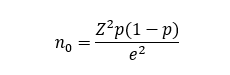
Where:
- Z = Z-score (1.96 for 95% confidence)
- p = Estimated population proportion
- e = Margin of error
This sample size calculation formula is suitable for survey-based dissertations grounded in quantitative sampling in research.
4.2 Using Statistical Software (e.g., G*Power)
Students conducting regression or hypothesis testing can use power analysis tools to determine the minimum sample required to detect significant relationships.
- Effect size
- Statistical power (usually 0.80)
- Significance level (0.05)
4.3 Rules of Thumb for Regression
A commonly used guideline in UK dissertations suggests ensuring adequate cases per predictor variable, especially when addressing the limitations of quantitative research.
Minimum 10–15 participants per predictor variable
For example, if your regression model includes 5 predictors:
→ Minimum sample = 50–75 respondents.
5. Practical Challenges Faced by UK Master’s Students
Several students face difficulties caused by | Examiners focus primarily on |
|
|
6. How to Justify Sample Size in Your Dissertation
The methodology chapter should include descriptions of the following items:[5]
- The size of the population you have chosen to study.
- How you chose your sampling style (random, convenience, or purposive).
- Any reasons, rules or regulations you were following when determining your statistical sample size.
- Any practical limitations that possibly exist in relation to your study, as well as the limitations on sample size you will face.
This ensures alignment, whether the study is purely quantitative or part of a mixed research design.
For example:
I had planned on having at least 120 people in my sample group because of the recommendation from the regression analysis standard which states to have 10 to 15 participants for every predictor variable. By meeting or exceeding 120 participants, we will create a reliable statistical data set, and this should be a reasonable goal to reach in the allotted time.
7. Ethical and Practical Considerations
Other considerations regarding sample sizes include the following: [6]
- Burden on participants.
- Compliance with GDPR (General Data Protection Regulation);
- Voluntary nature of participant recruitment; and
- Time needed to collect data.
Having an unrealistic target (sample size) may potentially bias the quality of your data.
Conclusion
When conducting sample size determination in UK master’s dissertation, researchers must balance statistical rigour with feasibility. Sample size depends on research objectives, population size, sampling method, and required confidence level. While a sample size calculation formula or statistical software can provide guidance, justification remains more important than achieving a specific number. Whether the study adopts a purely quantitative, qualitative, or mixed research design, clear reasoning strengthens academic credibility. Well-justified sampling enhances the reliability, validity, and scholarly merit of the completed dissertation.
How Should Sample Size Be Determined for Cross-Sectional Business Studies in UK Master’s Dissertations? [Talk to a Dissertation Expert | Book a Free 15-Minute Consultation]
References
- Althubaiti A. (2022). Sample size determination: A practical guide for health researchers. Journal of general and family medicine, 24(2), 72–78. https://doi.org/10.1002/jgf2.600
- Das, S., Mitra, K., & Mandal, M. (2016). Sample size calculation: Basic principles. Indian journal of anaesthesia, 60(9), 652–656. https://doi.org/10.4103/0019-5049.190621
- Setia M. S. (2016). Methodology Series Module 3: Cross-sectional Studies. Indian journal of dermatology, 61(3), 261–264. https://doi.org/10.4103/0019-5154.182410
- Faber, J., & Fonseca, L. M. (2014). How sample size influences research outcomes. Dental press journal of orthodontics, 19(4), 27–29. https://doi.org/10.1590/2176-9451.19.4.027-029.ebo
- Andrade C. (2020). Sample Size and its Importance in Research. Indian journal of psychological medicine, 42(1), 102–103. https://doi.org/10.4103/IJPSYM.IJPSYM_504_19
- Haddad LM, Geiger RA. Nursing Ethical Considerations. [Updated 2023 Aug 14]. In: StatPearls [Internet]. Treasure Island (FL): StatPearls Publishing; 2025 Jan-. Available from: https://www.ncbi.nlm.nih.gov/books/NBK526054/