
How to Write a Master’s Manuscript: Navigating Complex Journal Guidelines
How to Write a Master’s Manuscript: Navigating Complex Journal Guidelines
- Home
- How To Article
- How to Write a Master’s Manuscript: Navigating Complex Journal Guidelines
Table of Content
- Understanding Journal Requirements and Scope
- Structuring a Master’s Manuscript for Publication
- Adapting a Dissertation into a Journal Manuscript
- Academic Writing and Clarity for Journal Submission
- Formatting and Referencing Compliance
- Responding to Peer Review and Editorial Feedback
- Common Challenges and Practical Solutions
- Conclusion

How to Write a Master’s Manuscript: Navigating Complex Journal Guidelines
Successfully changing your master’s dissertation into a published dissertation is a major step in the academic career of many master’s students; however, they often face challenges when trying to conform their research into a set of increasingly complex requirements based on a particular journal’s standards. Academic journals maintain certain expectations that are very specific in terms of structure, format, reference style, originality, and transparency in methodology. Many students also encounter journal guideline problems in UK master’s manuscript preparation due to strict editorial policies. Successfully navigating those expectations requires a strategic understanding of scholarly communications and editorial norms. [1]
Students seeking best manuscript writing services or best manuscript assessment UK often do so to ensure their research meets publication standards. The purpose of this article is to provide a list of the most successful methods for preparing a master’s manuscript that adheres to a journal’s requirements while maximising its readability and effectively increasing your chances of having your manuscript published.[2]
1. Understanding Journal Requirements and Scope
Before creating a manuscript, a thorough review of the scope, purpose, and submission rules of the prospective journal must occur. Every journal has its own expectations for formatting, word count restrictions, reference style, and structure of the manuscript. Many postgraduate researchers working on a dissertation UK publication pathway must ensure that their manuscript aligns with journal-specific expectations.[3]
Consideration of the following elements is important when reviewing journals:
- The scope of the journal and whether the subject of your research will fit within this scope
- The word count and format associated with each specific journal
- The required citation/reference style (APA, Harvard, Chicago).
- The peer review process and the criteria for acceptance into the journal.
- Ethics and plagiarism policies.
Most manuscripts that are submitted to journals without proper adherence to the associated requirements are rejected as soon as they have been received, regardless of the quality of the research. Students often consult help with dissertation publication strategies or professional dissertation help services to avoid such rejections.
2. Structuring a Master’s Manuscript for Publication
A master’s manuscript differs from a full dissertation. It must be concise, focused, and aligned with the journal structure. Reviewing a Master’s Manuscript assessment example from previously published articles can help students understand how to structure their work for submission.[4]
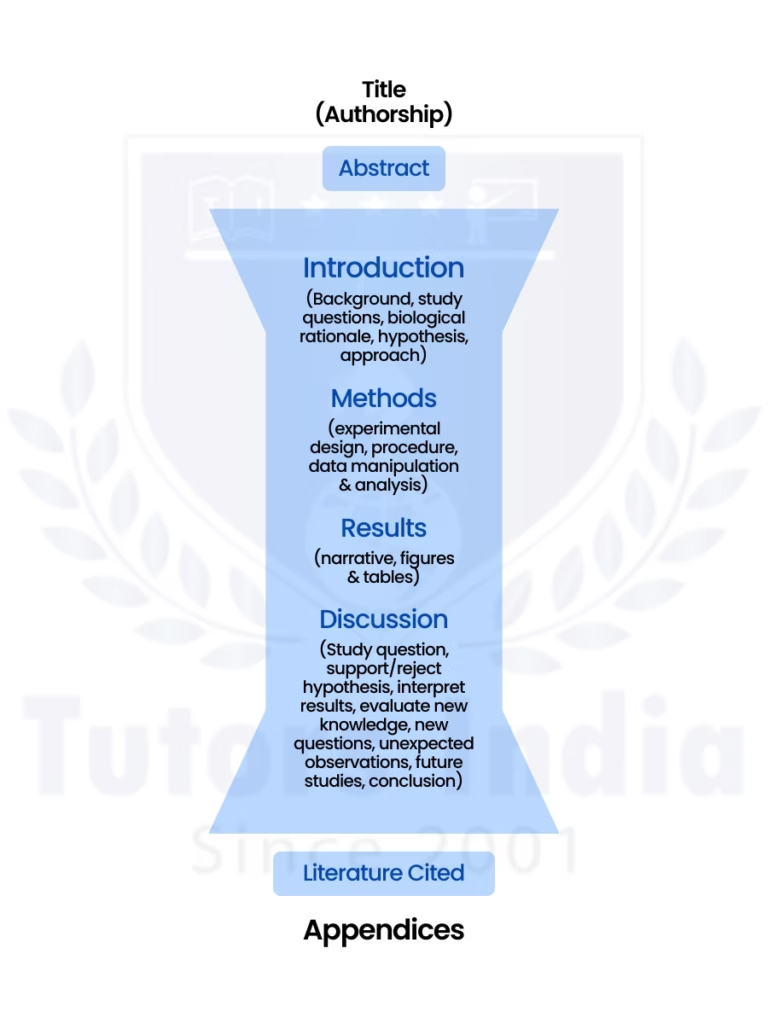
3. Adapting a Dissertation into a Journal Manuscript
Typically, dissertations are long and include comprehensive information while journal articles require concise writing and a focused perspective. Students need to condense material without losing the analysis/thoughtfulness of their work. Adapting your dissertation to an article will require you to:[4]
- Focus your discussion on a single research question or significant finding
- Reduce the length of your extensive literature reviews
- Present only essential details about your method
- Highlight your contribution to the existing body of knowledge and implications for practice
- Eliminate redundancy in terms of explanations and appendices
The adaptation process will involve more critical editing and restructuring than mere summary. Many students rely on best manuscript writing services and best manuscript assessment UK support to refine their manuscripts for submission.
4. Academic Writing and Clarity
When submitting manuscripts to scholarly journals, editors value clear, precise writing and a professional academic tone. Even well-researched work may be rejected if it lacks clarity and cohesion. [5]
- Use a formal academic style
- Maintain logical paragraph structure
- Avoid unnecessary jargon
- Use consistent terminology
- Present arguments clearly and concisely
Students should edit their manuscripts multiple times to ensure clarity and accuracy before submission. Professional dissertation help services can assist in improving clarity and structure.
5. Formatting and Referencing Compliance
All authors are required to strictly follow a journal’s formatting and referencing guidelines. An author’s inconsistency in formatting negatively impacts how the editorial staff evaluates the paper.
Category | Summary |
Formatting Guidelines | Follow journal formatting and referencing rules strictly. |
Structure | Use clear headings, sections, and proper layout. |
Citation Style | Apply the correct citation style consistently. |
Tables & Figures | Place tables and figures appropriately. |
Document Format | Maintain correct abstract, spacing, margins, and font. |
Reference Accuracy | Ensure citations match the reference list. |
Tools | Use Zotero, EndNote, or Mendeley for referencing. |
Benefit | Proper formatting shows professionalism and quality. |
Paying attention to detail signals professionalism and a scholarly approach to your writing. Many students seek help with dissertation formatting to meet journal expectations.
6. Responding to Peer Review and Editorial Feedback
Constructive peer-review feedback can lead to greater quality and acceptance rates for peer-reviewed manuscripts. Students using best manuscript assessment UK support or academic mentoring often find it easier to respond effectively to reviewer comments and improve their chances of publication: [6]
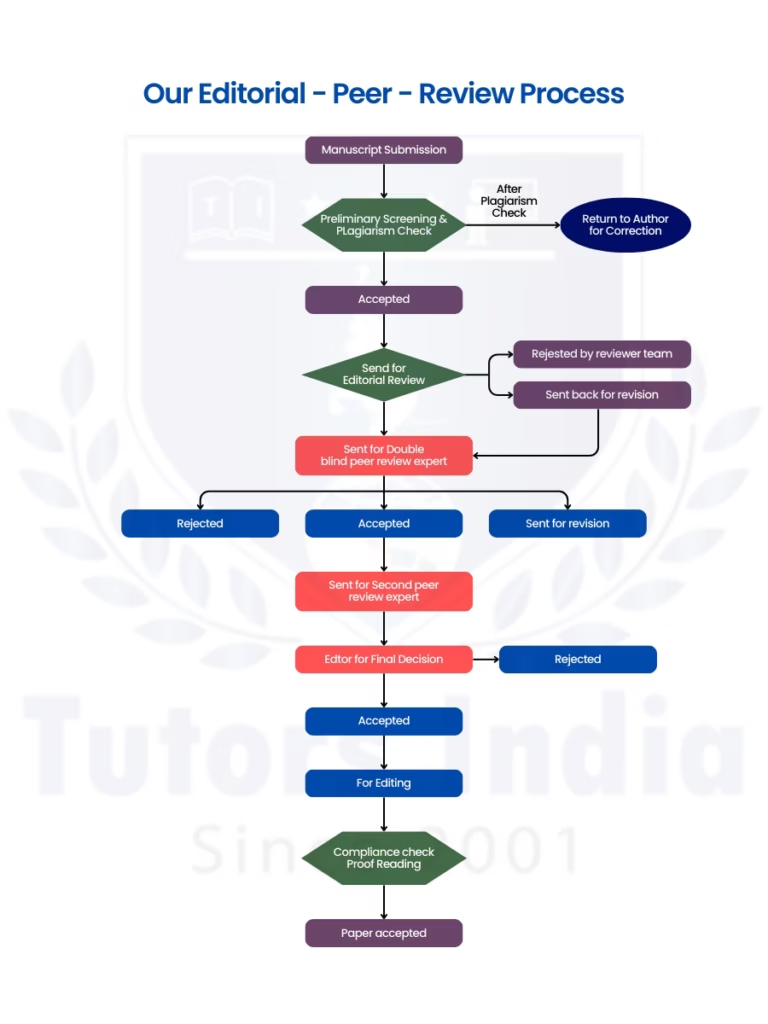
7. Common Challenges and Practical Solutions
Many graduate students face difficulties when preparing manuscripts for publication.
| Common Problems | Practical Solutions |
|---|---|
|
|
Understanding journal expectations helps students build confidence and produce high-quality manuscripts for publication. Access to dissertation help services and best manuscript writing services can further support this process.
Conclusion
Producing a master’s thesis that satisfies the criteria of different research journals requires a well-developed writing process, good written communication, and following all article writing and formatting guidelines. If you understand what journals want, a well-organised manuscript and the ability to respond positively to peer review, you will greatly increase the chances of your postgraduate research becoming an academic publication. The successful completion of these types of projects will also improve academic communications and the overall impact of your research.
Students working on dissertation UK publication pathways or seeking best manuscript assessment UK support can significantly enhance their chances of success. The successful completion of these projects will improve academic communications and increase the overall impact of your research.
How to Write a Master’s Manuscript: Navigating Complex Journal Guidelines. [Talk to a Dissertation Expert | Book a Free 15-Minute Consultation]
References
- Haas, M. R. C., Maggio, L. A., O’Brien, B. C., & Artino, A. R., Jr (2024). Strategies for Navigating Authorship. Journal of graduate medical education, 16(1), 84–85. https://doi.org/10.4300/JGME-D-23-00932.1
- Aga, S. S., & Nissar, S. (2022). Essential Guide to Manuscript Writing for Academic Dummies: An Editor’s Perspective. Biochemistry research international, 2022, 1492058. https://doi.org/10.1155/2022/1492058
- Ramia J. M. (2023). How to select a journal for your research. World journal of gastroenterology, 29(21), 3379–3384. https://doi.org/10.3748/wjg.v29.i21.3379
- Liumbruno, G. M., Velati, C., Pasqualetti, P., & Franchini, M. (2013). How to write a scientific manuscript for publication. Blood transfusion = Trasfusione del sangue, 11(2), 217–226. https://doi.org/10.2450/2012.0247-12
- Lingard L. (2022). Writing for the reader: Using reader expectation principles to maximize clarity. Perspectives on medical education, 11(4), 228–231. https://doi.org/10.1007/s40037-022-00708-w
- Kusumoto, F. M., Bittl, J. A., Creager, M. A., Dauerman, H. L., Lala, A., McDermott, M. M., Turco, J. V., Taqueti, V. R., Fuster, V., & Peer Review Task Force of the Scientific Publications Committee. (2023). Challenges and controversies in peer review: JACC review topic of the week. Journal of the American College of Cardiology, 82(21), 2054–2062. https://doi.org/10.1016/j.jacc.2023.08.056