
Why Ethical Issues Delay UK Research Proposal Approval
Why Do Ethical Issues Cause Delays or Rejection of Research Proposals in UK Universities?
- Home
- How To Article
- Why Do Ethical Issues Cause Delays or Rejection of Research Proposals in UK Universities?

Why Do Ethical Issues Cause Delays or Rejection of Research Proposals in UK Universities?
Ethical compliance is one of the basic requirements for proposals for research projects at UK universities and is a key concern when addressing ethical issues in UK research proposals. As a prerequisite for any dissertation or other research project involving human subjects, the collection of data, or the use of sensitive personal information, all students must obtain ethical approval from their respective institutions before beginning the project as part of writing a research proposal. Many proposals are delayed or denied because of ethical concerns caused by students not understanding what the institution’s requirements are or underestimating the many complexities of completing the ethical approval process UK universities require.[1]
Knowing the reasons that ethical concerns result in delays or denials will help students develop stronger proposals for their research projects and avoid delays or denials as they conduct their proposed projects, particularly when learning how to write a research proposal effectively.
1. Understanding Ethical Approval in UK Universities
Research Ethics in UK Higher Education Institutions helps ensure that research is conducted in a responsible manner, with an emphasis on the safety of the research participants and the legal protection of personal and sensitive data. Most institutions will require students to make an ethical application that details how they will obtain informed consent from participants, maintain the confidentiality of participants, and mitigate any potential risks associated with the participation of each participant.[2]
The following are key ethical frameworks that are adhered to at UK Higher Education Institutes:
- Institutional Ethics Committee Guidelines
- UK Research Integrity Office (UKRIO) Policy
- General Data Protection Regulation (GDPR)
If a research proposal does not comply with the above ethical guidelines, it may require modification and/or be delayed and/or rejected, which is a frequent issue seen in an
2. Common Ethical Issues That Cause Delays
- Incomplete or Incorrect Ethics Applications
An incomplete ethics form is often the reason behind delay. There are a few ways students can make this mistake:
- Applications sometimes miss sections of the application.
- Applications sometimes have vague answers to questions.
- Applications do not include an attached consent form or a participant information sheet.
Detailed research procedures are required by ethics committees, so if your application is not complete, it will likely be sent back to you for revision, particularly during writing a research proposal for UK universities.
- Lack of Informed Consent Procedures
Obtaining informed consent is an essential ethical principle. Proposals may be postponed if they do not adequately address: [3]
- informing participants about the study,
- whether any documentation of consent will be acquired,
- each participant’s right to withdraw. Without the proper materials documenting consent, there is no way for the ethics committee to approve data collection.
- Data Protection and GDPR Concerns
GDPR compliance must be assured by universities in the UK when they collect any kind of personally identifiable information. If a student does not provide the information outlined below, their application will likely be rejected by their respective ethics committee:[4]
- How the data will be safely stored
- Who will have access to the data
- How long the data will be retained
Without the proper materials documenting consent, there is no way for the ethics committee to approve data collection during the ethical approval process UK universities require.
- Risk to Participants
It is required to address all possible risks in a low-risk study. Students often do not consider:
- Emotional or psychological risks
- Cultural sensitivities
- Confidentiality
Ethics committees require both a thorough risk assessment and a strategy for minimising those risks. Without these elements, approval will be delayed.
3. Visual Overview of Ethics Approval Process
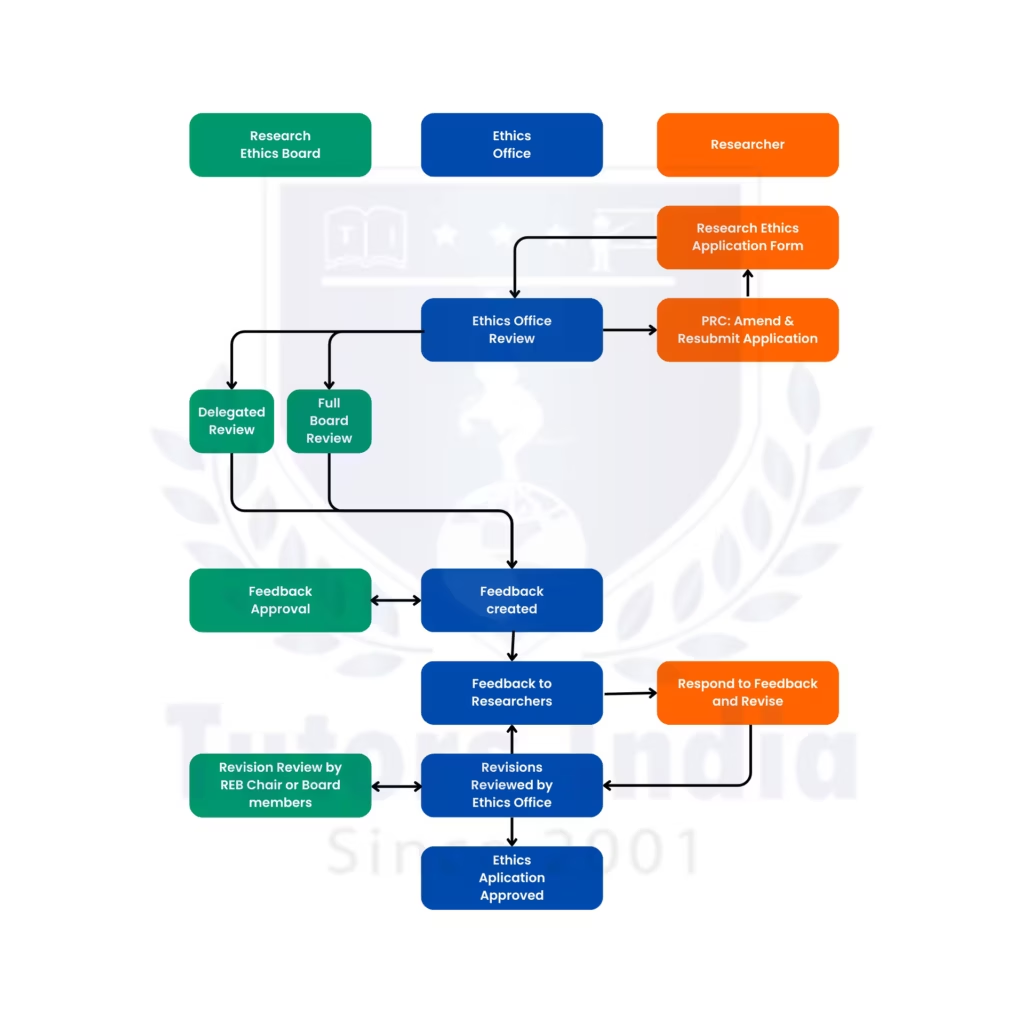
This visual demonstrates the typical ethics approval workflow in UK universities, from proposal submission and review to approval or revision requests, commonly followed when preparing an example of research proposal for academic submission
Description:
This visual demonstrates the typical ethics approval workflow in UK universities, from proposal submission and review to approval or revision requests.
Ethical Issue | How It Affects Proposals | Possible Outcome |
Incomplete ethics forms | Missing information | Application returned |
Weak consent process | Participant rights unclear | Revision required |
GDPR non-compliance | Data protection risk | Proposal rejected |
Risk assessment missing | Participant safety unclear | Approval delayed |
Sensitive topic research | Extra review required | Extended review time |
4. Why Proposals Are Rejected
Research proposals are frequently denied based on more than just academic reasons, as ethical implications have a strong impact. Specific examples of how proposals could be rejected include:[5]
- Data is collected before receiving approval.
- Participants in the study are particularly vulnerable, and no mechanisms exist to provide protection.
- The procedures for obtaining informed consent from participants and procedures regarding maintaining confidentiality of participant data are not clear.
- There are more ethical risks to the study than there are benefits to the study’s outcome.
Because of this, when a student gets rejected for their research proposal, they may be required to revise or redesign portions of their research, causing considerable delays in writing a research proposal.
5. How Students Can Avoid Ethics-Related Delays
Plan Ethics Approval Early
You must consider ethics approval as part of your proposal development process, not when finalising your research design!
Regularly Consult Supervisors: Your supervisor will assist you to:
- interpret ethical codes and guidelines
- review your ethics forms
- identify potential ethical risks
You will be advised early if your proposal is likely to be rejected.
Utilise University Templates: Most UK Higher Education Institutions will have the following available to you:
- Consent Form Templates
- Participant Information Sheets
- Ethics Application Samples
By using these you will ensure that your project is compliant with the Institution’s ethical codes.
Create a Clear Data Management Plan: In developing a Data Management Plan you should state:
- where you will keep your project data (Research Data Store, Secure Server etc.)
- who has access to your project data
- how you will maintain the confidentiality of your participants’ information
Having a strong data management plan will greatly improve your chances of receiving ethical approval.
Benefits of Excellent Ethical Planning: If you follow sound ethical planning, you will see that your project will benefit from:
- faster approval of your research project proposals
- fewer revisions of your research project proposals
- increased credibility of your research project and your doctoral dissertation
- greater possibility of success for your doctoral dissertation
Overall, ethical planning provides you with further strength in both your research process and in your integrity as an academic.
Conclusion
In the UK, ethical problems are a major reason for delays or rejection of research proposals and are among the most significant ethical issues in UK research proposals. Common problems include incomplete ethics applications, unclear consent procedures, weak data protection planning, and insufficient risk assessment.
Students can prevent delays and ensure their research proposals meet UK academic and legal standards by planning early, consulting supervisors, and carefully following institutional ethics guidelines. Strong ethical preparation not only ensures faster approval but also improves the credibility and quality of the research proposal and dissertation.
References
- Drolet, M. J., Rose-Derouin, E., Leblanc, J. C., Ruest, M., & Williamsjones, B. (2023). Ethical Issues in Research: Perceptions of Researchers, Research Ethics Board Members and Research Ethics Experts. Journal of Academic Ethics, 21(2), 269–292. https://doi.org/10.1007/s10805-022-09455-3
- Garcia-Iglesias, J., Beange, I., Davidson, D., Goopy, S., Huang, H., Murray, F., Porteous, C., Stevenson, E., Rhodes, S., Watson, F., & Fletcher-Watson, S. (2024). Ethical considerations in public engagement: developing tools for assessing the boundaries of research and involvement. Research involvement and engagement, 10(1), 83. https://doi.org/10.1186/s40900-024-00617-8
- Shah P, Thornton I, Kopitnik NL, et al. Informed Consent. [Updated 2024 Nov 24]. In: StatPearls [Internet]. Treasure Island (FL): StatPearls Publishing; 2025 Jan-. Available from: https://www.ncbi.nlm.nih.gov/books/NBK430827/
- Yuan, B., & Li, J. (2019). The Policy Effect of the General Data Protection Regulation (GDPR) on the Digital Public Health Sector in the European Union: An Empirical Investigation. International journal of environmental research and public health, 16(6), 1070. https://doi.org/10.3390/ijerph16061070
- Y. (2024, January 23). 4 Real reasons your research proposal was rejected. Medium. https://tesudo-yamasaki.medium.com/4-real-reasons-your-research-proposal-was-rejected-f4bcca087e0b