
Why Do Students Struggle with Formatting and Including Appendices in a Dissertation?
Why Students Struggle with Dissertation Formatting & Appendices
- Home
- How To Article
- Why Do Students Struggle with Formatting and Including Appendices in a Dissertation?
Realistic Dissertation Proposal Timeline

Why Students Struggle with Dissertation Formatting & Appendices
The formatting of a student’s dissertation as well as the addition of appendices is frequently found to be a challenge to overcome by many students, particularly those working on a master’s dissertation. This is since although the dissertation’s primary focus and relevance is based on original research conducted by the researcher (the student), it is also important for the academic community to establish academic credibility for the research through proper formatting and inclusion of supplementary materials, such as appendices in thesis work. As a result of underestimating the level of complexity involved in meeting these technical requirements, students will typically face difficulties that affect overall dissertation quality.[1]
The main causes of difficulties with applying correct formatting and managing appendices will be examined within this section, as well as why, no matter the level at which they are completed (undergraduate or postgraduate), the use of appendices and correctly formatted research papers will be present in most students’ dissertations.[2]
1. Understanding Dissertation Formatting
Dissertation Formatting Guidelines: Although the basic principles of using a dissertation are the same, every university has specific stipulations on how to format (layout) and structure dissertations. Therefore, even though the format may appear similar, it varies from school to school as outlined in the respective university’s guidelines (or their website), which is often overlooked in custom dissertation writing.[3]
NOTE: Some of the most common formatting issues that dissertations tend to encounter are listed below:
- A variation in title heading levels (e.g., some schools have level one headings and others do not).
- Misconfigured title margins: Title or margins misaligned or improperly placed.
- Misapplied citation referencing formats (e.g., in-text citations).
- Tables/figures not formatted correctly; and
- Poorly developed headers (i.e., not maintaining consistency throughout).
Another large group of students lack advanced word processing skills, so they rely heavily on trial and error when attempting to produce a workable document. Consequently, these small errors can quickly pile up and create a significant negative impact on the overall quality of the dissertation.
2. Challenges with Appendices
One type of supporting material for some dissertations are appendices, which often contain significant amounts of information that would otherwise be difficult to locate in one area or demonstrate as attached. Common dissertation appendices examples include interview transcripts, raw data collected, sample questionnaires used during the study, consent forms signed by participants, and extensive tables created.[4]
Too often, students encounter difficulty when utilizing appendices due to several reasons:
- They may lack knowledge regarding what type of information should be included in an appendix and what type of information should go in the body of the dissertation when learning how to write appendices.
- They may also be unsure about how they should label and reference their appendices appropriately.
- Appendices are frequently added late while writing the dissertation.
In addition, most students do not understand whether the word count restriction includes appendices; this has created confusion and has resulted in many students improperly utilizing appendices to exceed the word limit.
3. Institutional and Skills-Based Factors
Inconsistent or unclear direction from schools is another significant factor contributing to the problems students experience in the writing process. Often the guidebooks produced by institutions regarding dissertation completion provide such vast amounts of material and are so overly technical that they do not aid in clarity of understanding. Additionally, supervisors may have many ways of conveying what they want for content; thus, many students have no clear idea of the level of expectation.
Other contributory factors include.
- A lack of training in academic writing
- The stress created from time constraints due to the deadline for submission
- Anxiousness and/or perfectionism
- Overdependence on templates without understanding the principles of proper formatting.
These combined effects create a perception of formatting as so overwhelming to the first-time writer that he/she has no concept of where to begin.
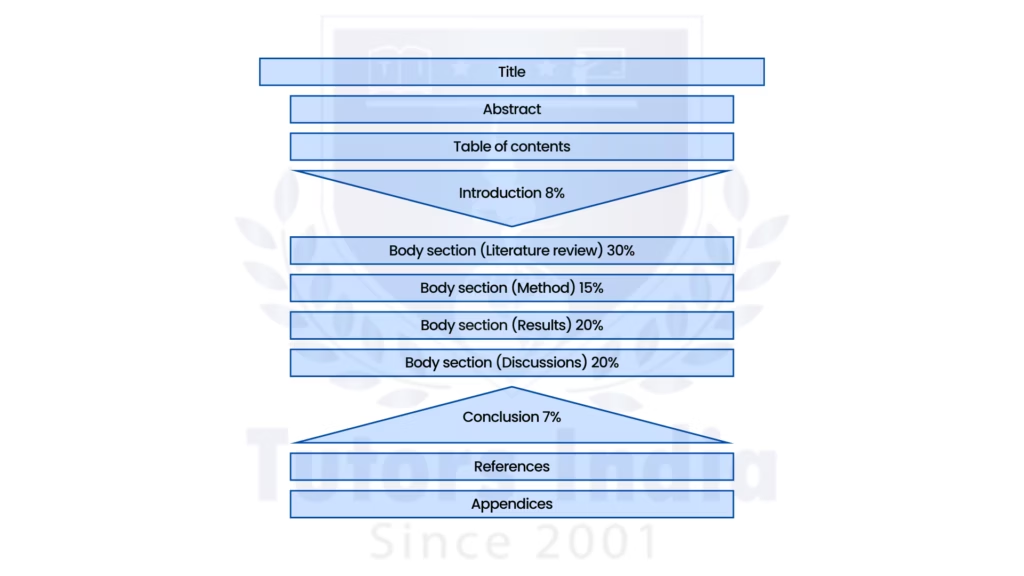
4. Visual Example
A visual overview of dissertation chapters and their supporting appendices.
Conclusion
Formatting and appendices can be challenging for students, as they must demonstrate technical accuracy, institutional compatibility, and advanced document management skills. While students receive training in research and analysis, they often receive limited guidance on presentation and structure. More targeted instruction, early training, and increased use of formatting support tools often available through custom dissertation writing support can help students successfully manage appendices and formatting requirements. These steps ensure students complete their dissertation submissions with a clear understanding of formatting standards and effective use of appendices.
Need help meeting university formatting and appendix requirements? Tutors India offers expert academic guidance. [Get Expert Support] or [Schedule a Free Consultation]
References
- iN Education. (2025, September 2). 8 appendix mistake that almost ruined my dissertation – and how I fixed it. iN Education Inc. https://ineducationonline.org/2025/09/02/8-appendix-mistakes-that-almost-ruined-my-dissertation/
- Singh, S. (2025, December 30). How to write an appendix in a research paper (with examples). Paperpal Blog. https://paperpal.com/blog/academic-writing-guides/research-paper-appendix-examples-and-format
- APA 7th Referencing Style Guide. (2019, November 12). Libguides.com. https://aut.ac.nz.libguides.com/APA7th/theses
- Lin JS, Whitlock EP, Eckstrom E, et al. Challenges in Synthesizing and Interpreting the Evidence From a Systematic Review of Multifactorial Interventions to Prevent Functional Decline in Older Adults [Internet]. Rockville (MD): Agency for Healthcare Research and Quality (US); 2012 Oct. (Evidence Syntheses/Technology Assessments, No. 94.) Appendix E, Appendix References. Available from: https://www.ncbi.nlm.nih.gov/books/NBK114227/